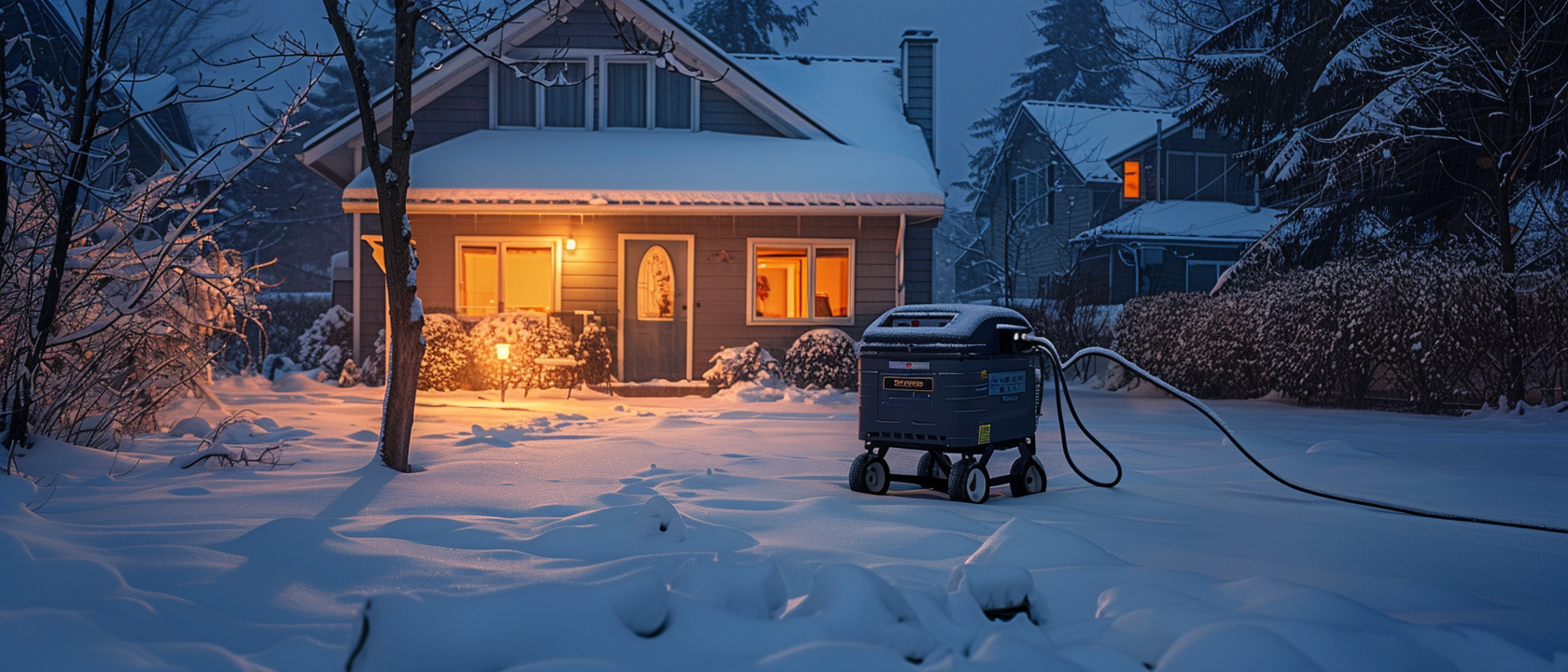
Best Portable Generators for Home Backup Power
Top portable generators for power outages and emergencies. Compare inverter vs conventional, wattage needs, and our picks for home backup in 2025.
Affiliate Disclosure: ZT1 Prep is reader-supported. When you buy through links on our site, we may earn an affiliate commission at no additional cost to you. This helps us keep creating practical preparedness content. Full disclosure.
Best Portable Generators for Home Backup Power
When the power goes out, a portable generator keeps your furnace running, your fridge cold, and your phones charged. For winter storm preparedness, it’s one of the most valuable pieces of equipment you can own.
This guide covers what size generator you need, the best models for home backup, and critical safety information.
Quick Picks
| Need | Recommendation | Price Range |
|---|---|---|
| Best Overall | Honda EU2200i | $1,000-1,200 |
| Best Value | Champion 3400W | $500-600 |
| Best Large Capacity | Westinghouse iGen4500 | $800-1,000 |
| Budget Pick | Predator 3500 | $700-800 |
How to Size a Generator
Step 1: List your essential loads
| Appliance | Running Watts | Starting Watts |
|---|---|---|
| Furnace blower | 300-500W | 500-1000W |
| Refrigerator | 100-200W | 400-600W |
| Sump pump | 400-600W | 800-1200W |
| Lights (LED) | 10-50W | Same |
| Phone charger | 5-20W | Same |
| TV | 100-300W | Same |
| Space heater (1500W) | 1500W | Same |
Step 2: Add your running watts Example: Furnace (400) + Fridge (150) + Lights (30) + Phone (10) = 590 running watts
Step 3: Add highest starting watts Furnace starting surge: 800W Total needed: 590 running + 800 starting = ~1400 watts minimum
Recommendation: For most homes, a 2000-3500W inverter generator handles furnace + fridge + lights comfortably.
Pro Tip
Get 20-30% more capacity than your calculated need. You’ll find more things to plug in during an outage.
Inverter vs Conventional Generators
| Factor | Inverter | Conventional |
|---|---|---|
| Noise | 50-60 dB (quiet) | 70-80 dB (loud) |
| Fuel efficiency | Excellent (variable speed) | Fair (constant speed) |
| Power quality | Clean sine wave | Rougher, can damage electronics |
| Price | Higher ($500-1500) | Lower ($300-800) |
| Weight | Lighter | Heavier |
| Best for | Home backup, electronics | Job sites, high loads |
For home backup: Inverter generators are worth the premium. They’re quieter (neighbors will thank you), more fuel-efficient, and safer for sensitive electronics.
Top Generators for Home Backup
Honda EU2200i — Best Overall
Honda EU2200i Inverter Generator
The gold standard for portable inverter generators. Whisper-quiet, fuel-efficient, and legendary reliability.
Pros
- Legendary Honda reliability
- Very quiet (48-57 dB)
- Excellent fuel efficiency
Cons
- Premium price point
- May need two for large loads
ℹ️ EU2200i is current model - older EU2000i discontinued
Check Price on AmazonThe Honda EU2200i is the gold standard for portable inverter generators. It’s whisper-quiet, bulletproof reliable, and sips fuel.
Specs:
- Running watts: 1800W
- Starting watts: 2200W
- Noise: 48-57 dB (quieter than conversation)
- Runtime: 8.1 hours at 25% load
- Weight: 47 lbs
Why it’s the best:
- Legendary Honda reliability
- Parallel-capable (link two for 4400W)
- Incredible fuel efficiency
- 3-year warranty
- Excellent resale value
Drawbacks:
- Premium price
- May need parallel kit for large loads
Best for: Those who want the best and can afford it.
Champion 3400W Dual Fuel — Best Value
Champion 3400W Dual Fuel Inverter Generator
Excellent value dual fuel generator. Runs on gas or propane with electric start.
Pros
- Runs on gas or propane
- Electric start
- Great price-to-performance
Cons
- Heavier than smaller inverters
- Louder than Honda
ℹ️ Model 200986 is dual fuel version
Check Price on AmazonThe Champion 3400 offers more power than the Honda at half the price, plus it runs on gas or propane.
Specs:
- Running watts: 3100W (gas) / 2790W (propane)
- Starting watts: 3400W (gas) / 3060W (propane)
- Noise: 59 dB
- Runtime: 7.5 hours at 25% load (gas)
- Weight: 95 lbs
Why we like it:
- Dual fuel flexibility (propane stores forever)
- Electric start
- More power than most 2000W units
- Great warranty support
- Excellent price-to-performance
Drawbacks:
- Heavier than smaller inverters
- Not as quiet as Honda
Best for: Budget-conscious buyers who want flexibility.
Westinghouse iGen4500 — Best Large Capacity
Westinghouse iGen4500 Inverter Generator
High-capacity inverter generator with remote start capability. Powers larger loads.
Pros
- 3700W running / 4500W peak
- Remote start option
- 18 hour runtime
Cons
- Heavy (98 lbs)
- Large fuel tank to fill
ℹ️ iGen4500 vs iGen4500DF (dual fuel)
Check Price on AmazonWhen you need to run more than the basics, the iGen4500 handles larger loads while staying relatively quiet.
Specs:
- Running watts: 3700W
- Starting watts: 4500W
- Noise: 52 dB at 25% load
- Runtime: 18 hours at 25% load
- Weight: 98 lbs
Why it stands out:
- Powers furnace + fridge + sump pump + more
- Very long runtime
- Remote start option
- LED data center display
- RV-ready (TT-30R outlet)
Drawbacks:
- Heavy
- Large fuel tank to fill
Best for: Larger homes or those who need to run multiple high-draw appliances.
Predator 3500 — Budget Pick
Predator 3500 Super Quiet Inverter Generator
Harbor Freight's budget inverter generator with solid performance at aggressive pricing.
Pros
- Excellent price
- Good power output
- Electric start
Cons
- Mixed reliability reports
- Heavier than premium brands
ℹ️ Buy in-store at Harbor Freight for best price
Check Price on AmazonHarbor Freight’s Predator line offers solid performance at aggressive prices.
Specs:
- Running watts: 3000W
- Starting watts: 3500W
- Noise: 57 dB
- Runtime: 11 hours at 25% load
- Weight: 100 lbs
Why it works:
- Excellent price
- Good power output
- Readily available at Harbor Freight
- Electric start
- CO secure shutoff on newer models
Drawbacks:
- Mixed reliability reports
- Heavier than premium brands
- Shorter warranty
Best for: Budget-focused buyers willing to trade some reliability for savings.
Generator Safety
Generators Kill People Every Year
Carbon monoxide from generators causes deaths during every major power outage. These rules are non-negotiable.
Location:
- Run ONLY outdoors
- At least 20 feet from any window, door, or vent
- Point exhaust away from house
- Never in garage, even with door open
Operation:
- Let cool before refueling
- Use fresh fuel (add stabilizer if stored)
- Don’t overload (causes damage and fire risk)
- Use heavy-duty outdoor-rated extension cords
Never do this:
- Run indoors or in enclosed space
- Backfeed into house wiring (hire electrician for transfer switch)
- Refuel while running
- Touch with wet hands
Fuel Storage Tips
- Store gasoline in approved containers
- Use fuel stabilizer (gas goes bad in 3-6 months)
- Store away from living areas and ignition sources
- 10-15 gallons is a reasonable emergency supply
- Rotate fuel every 6-12 months
Generator Maintenance
Before storm season:
- Run generator for 15-30 minutes monthly
- Check oil level before each use
- Change oil per manufacturer schedule
- Inspect air filter
- Test all outlets with a load
After each use:
- Run until fuel is used OR add stabilizer
- Turn off fuel valve if equipped
- Store in dry location
Frequently Asked Questions
Can a 2000W generator run a furnace?
How long will a generator run on a tank of gas?
Should I get an inverter or conventional generator?
Do I need a transfer switch?
Can I parallel two small generators?
Related Guides:
ZT1 Prep Team
Practical preparedness for real life
Related Guides
Best Rechargeable Lanterns for Emergency Preparedness
Top rechargeable lanterns and lights for power outages and emergencies. USB charging, solar options, and long runtime picks for 2025.
gearBest Indoor Propane Heaters for Emergency Heat
Top indoor-safe propane heaters for power outages and emergencies. Compare BTU output, safety features, and runtime for the best emergency heating options.
comparisonsGenerator vs Power Station: Which Is Right for Emergency Backup?
Compare portable generators and battery power stations for emergency preparedness. Learn which backup power solution fits your needs, budget, and situation.