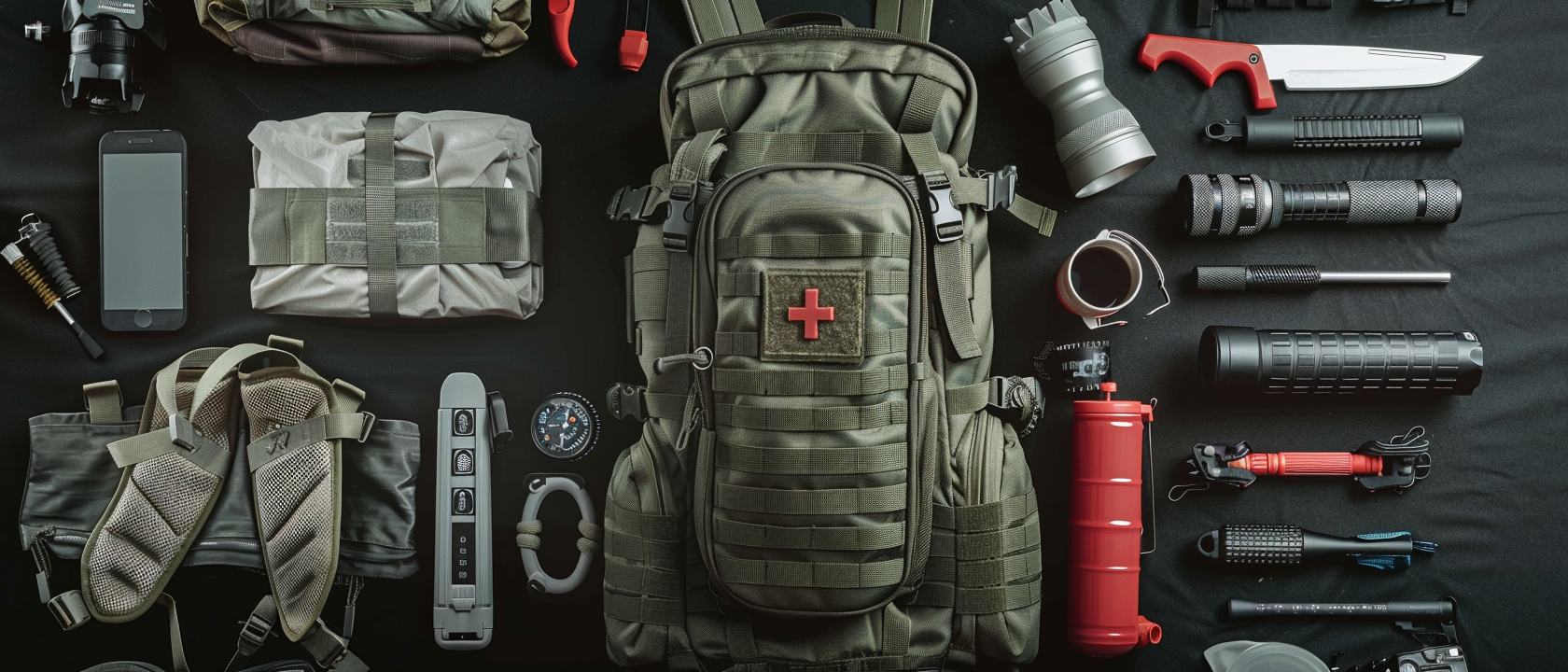
How to Build a Bug Out Bag: Complete Beginner Guide + Checklist
Learn how to build a bug out bag from scratch. Complete checklist, packing priorities, weight guidance, and beginner-friendly gear recommendations.
Affiliate Disclosure: ZT1 Prep is reader-supported. When you buy through links on our site, we may earn an affiliate commission at no additional cost to you. This helps us keep creating practical preparedness content. Full disclosure.
How to Build a Bug Out Bag: Complete Beginner Guide
A bug out bag (BOB) is a pre-packed kit that lets you survive independently for 72 hours if you need to evacuate your home quickly. Whether it’s a wildfire, hurricane, flood, or other emergency, your BOB gives you everything essential in one grab-and-go package.
This guide walks you through building your first bug out bag—what to include, how to prioritize, and how to avoid common mistakes.
What Is a Bug Out Bag?
A bug out bag is a portable kit containing the supplies you need to survive for at least 72 hours (3 days) away from home. The name comes from military slang—“bugging out” means evacuating quickly.
Key characteristics:
- Self-contained — Everything you need in one bag
- Portable — Light enough to carry for extended periods
- Ready to go — Packed and stored where you can grab it fast
- 72-hour minimum — Enough supplies for 3 days of independence
Bug Out Bag vs. Other Kits
A BOB is different from a get home bag (smaller, for getting home from work) or a 72-hour kit (home-based supplies). Your BOB is specifically for leaving home quickly.
Who Needs a Bug Out Bag?
Not everyone needs a full bug out bag. Consider building one if you:
- Live in an area prone to wildfires, hurricanes, or floods
- Could face evacuation orders
- Live in a location with limited exit routes
- Want maximum preparedness for any scenario
If evacuation is unlikely in your area, focus on a home 72-hour kit first.
The 10 Categories of Bug Out Bag Essentials
Every bug out bag should address these ten survival priorities:
1. Water (Top Priority)
Water is your most critical need. You can survive weeks without food but only days without water.
Pack:
- 1-2 liters of water in durable bottles
- Water filter (like the Sawyer Squeeze)
- Purification tablets as backup
- Collapsible water container for resupply
Sawyer Squeeze Water Filter
Highly rated point-of-use water filter with 0.1 micron filtration. Lightweight and versatile for bags of all sizes.
Pros
- Filters 100,000 gallons
- Lightweight (3 oz)
- 0.1 micron absolute filtration
Cons
- Can freeze and crack in winter
- Squeeze bags may wear out
ℹ️ Check current price and included accessories on Amazon
Check Price on AmazonHow much? Minimum 1 liter carried, plus filtration/purification for more.
See our complete guide: Best Water Filters for Bug Out Bags →
2. Shelter & Sleep
Protection from the elements can be life-saving. Even in mild weather, nights get cold.
Pack:
- Emergency bivvy or lightweight sleeping bag
- Compact tarp (8x10 ft minimum)
- Paracord (50-100 ft)
- Ground pad or emergency blanket
SOL Emergency Bivvy
Reflective emergency bivvy that retains 90% of body heat. Essential for every bag.
Pros
- Retains 90% body heat
- Weighs only 3.8 oz
- Reusable (unlike blankets)
Cons
- Can cause condensation inside
- Crinkly/noisy material
ℹ️ Get the bivvy, not the blanket - bivvy is reusable
Check Price on AmazonDecision: Emergency Bivvy vs. Sleeping Bag—which should you pack?
3. Fire & Heat
Fire provides warmth, water purification, cooking, signaling, and morale.
Pack:
- Primary: Bic lighter in waterproof case
- Backup: Ferro rod fire starter
- Tinder: Cotton balls with petroleum jelly or commercial fire starters
- Optional: Compact stove for cooking
Tip: Pack 3 ways to make fire. Lighters fail, matches get wet, ferro rods need practice—redundancy matters.
Exotac fireSLEEVE Lighter Case
Waterproof case for standard Bic lighters. Turns a disposable lighter into reliable survival gear.
Pros
- Makes any Bic waterproof
- Adds grip and durability
- Lanyard attachment
Cons
- Lighter not included
- Adds bulk to lighter
ℹ️ Lighter sold separately
Check Price on AmazonBest Fire Starters for Bug Out Bags →
4. Light
Darkness makes everything harder. Good lighting is essential for safety and morale.
Pack:
- Primary flashlight (200+ lumens)
- Headlamp for hands-free work
- Extra batteries
- Optional: Glow sticks for marking/signaling
Streamlight ProTac 2L-X
Professional-grade tactical flashlight with excellent durability and output.
Pros
- 500 lumens output
- IPX7 waterproof
- Impact resistant
Cons
- Uses CR123A batteries
- Tail switch only
ℹ️ Check battery type - USB rechargeable version available
Check Price on AmazonCompare: Flashlight vs. Headlamp—Which Should You Pack?
5. First Aid
Most emergencies involve minor injuries. Be ready to handle cuts, burns, blisters, and sprains.
Pack:
- Quality first aid kit (not dollar store junk)
- Personal medications (2-week supply minimum)
- Blister care (moleskin, bandages)
- Pain relievers, antihistamines, anti-diarrhea meds
Surviveware Large First Aid Kit
Comprehensive 200-piece kit with MOLLE attachment. Great for families.
Pros
- 200 pieces
- Labeled compartments
- MOLLE compatible
Cons
- Larger/heavier
- Some fillers included
ℹ️ Check current contents - may vary by batch
Check Price on AmazonWarning
This is not medical advice. Learn basic first aid skills—the Red Cross offers excellent courses. Your kit is only as good as your knowledge.
6. Tools
A good cutting tool handles countless tasks—shelter building, food prep, repairs, and more.
Pack:
- Fixed blade knife OR quality multitool
- Duct tape (wrap around water bottle to save space)
- Zip ties
- Small repair kit (needle, thread, safety pins)
Leatherman Wave+
The gold standard in multitools. 18 tools, built to last generations.
Pros
- 18 essential tools
- Outside-accessible blades
- 25-year warranty
Cons
- Higher price point
- Heavier than budget options
ℹ️ Wave+ has replaceable cutters, original Wave does not
Check Price on AmazonMultitool vs. Fixed Blade—What to Pack?
7. Food
You can survive without food for 72 hours, but calories maintain energy and morale.
Pack:
- Emergency food bars (2,400-3,600 calories)
- Optional: Freeze-dried meals (require water and stove)
- Energy bars or trail mix
- Electrolyte packets
Datrex Emergency Food Bars
Coast Guard approved emergency rations. 5-year shelf life, non-thirst provoking.
Pros
- 5-year shelf life
- Coast Guard approved
- Non-thirst provoking
Cons
- Bland taste
- Not a complete diet
ℹ️ Check manufacture date for freshest stock
Check Price on AmazonTip: Focus on calorie density and shelf life over taste. This is survival food, not camping food.
8. Navigation
If you need to evacuate on foot, knowing where you’re going matters.
Pack:
- Local/regional maps (paper, not phone-dependent)
- Compass (learn basic use)
- GPS device or phone with offline maps
Know: Your evacuation routes—primary and alternates.
9. Communication & Power
Information and the ability to reach others can be critical.
Pack:
- Emergency radio (NOAA weather band)
- Power bank (10,000+ mAh)
- Charging cables
- Written list of emergency contacts
Midland ER310 Emergency Radio
Multiple power options including hand crank and solar. NOAA weather alerts.
Pros
- 4 power sources
- NOAA weather alerts
- Built-in flashlight
Cons
- Crank is slow to charge
- Solar is supplemental only
ℹ️ ER310 is newer than ER300 - verify model
Check Price on AmazonAnker PowerCore 10000
Compact, reliable power bank with excellent capacity-to-weight ratio.
Pros
- 10,000mAh capacity
- Very compact
- 2+ phone charges
Cons
- Single USB-A port
- No fast charging input
ℹ️ Multiple versions - check for USB-C if needed
Check Price on AmazonBest Emergency Radios → | Best Power Banks →
10. Documents & Personal
Important documents and personal items round out your kit.
Pack:
- Copies of IDs, insurance, medical info (waterproofed)
- Cash (small bills)
- Emergency contact list
- Change of clothes (weather-appropriate)
- Hygiene basics (toilet paper, hand sanitizer, toothbrush)
Complete Bug Out Bag Checklist
Bug Out Bag Essentials
- Water bottles (1-2 liters) Essential
-
- Purification tablets Recommended
-
- Tarp or emergency shelter Recommended
- Paracord (50 ft) Recommended
-
-
-
-
-
- Extra batteries Essential
-
- Personal medications Essential
-
- Duct tape Recommended
-
- Regional maps Recommended
- Compass Optional
-
-
- Phone charger Essential
- Document copies (waterproofed) Essential
- Cash ($100+ in small bills) Essential
- Change of clothes Recommended
- Hygiene kit Recommended
Optional & Recommended Additions
Beyond the essentials, experienced preppers and organizations like FEMA and the Red Cross recommend additional items based on your situation.
Tools & Safety
Additional Tools
-
More capable than multitool for heavy cutting tasks
-
Protect hands from glass, debris, thorns
-
Signaling device audible for miles
- N95 masks (2-3) Optional
Dust, smoke, and debris protection
- Safety glasses Optional
Eye protection for debris
-
Dozens of uses: sun protection, dust mask, sling, water filter
Morakniv Companion Fixed Blade
Legendary Scandinavian knife with incredible value. Razor sharp out of the box.
Pros
- Exceptional value
- Razor sharp edge
- Comfortable grip
Cons
- Plastic sheath basic
- Short blade for batoning
ℹ️ Stainless (HD) vs Carbon - carbon sharper but rusts
Check Price on AmazonDocuments & Personal Items
According to FEMA, you should have copies of critical documents ready to grab.
Documents & Personal
-
- Copies of IDs (driver's license, passport) Essential
- Insurance documents (home, auto, health) Essential
- Birth certificates Recommended
- Medical records & prescription list Essential
- Emergency contact list (written) Essential
- Cash ($200+ in small bills) Essential
ATMs may not work; small bills for exact change
- Photos of family members Recommended
For identification if separated
- USB drive with digital copies Optional
Encrypted backup of all documents
ARAE Waterproof Document Bag
Fireproof and waterproof bag for important documents. Protects passports, birth certificates, and insurance papers.
Pros
- Fireproof to 2000°F
- Waterproof zipper seal
- Fits letter-size documents
Cons
- Not rated for submersion
- Can be bulky when full
ℹ️ Check size - multiple sizes available
Check Price on AmazonComfort & Morale Items
Don’t underestimate morale. Survival experts consistently recommend packing a few comfort items—being mentally resilient matters as much as physical supplies.
Comfort & Morale
-
Entertainment, stress relief, pass time
- Small notebook and pen Recommended
Notes, messages, journaling
- Comfort food (chocolate, hard candy) Optional
Psychological boost in tough times
- Coffee or tea bags Optional
Warm drink improves morale significantly
- Family photos Optional
Reminder of normal life
- Small book or e-reader Optional
Mental escape during downtime
Family & Children’s Items
If you have children, Mountain House and TruePrepper recommend packing kid-specific items. Children need comfort even more than adults during emergencies.
For Families with Children
- Small toy or stuffed animal Recommended
Comfort item—don't skip this
- Coloring book and crayons Recommended
Keeps kids occupied during waiting
- UNO or small card game Optional
Family activity, stress relief
- Glow sticks Optional
Light, marking, entertainment
- Familiar snacks Recommended
Comfort food they'll actually eat
- Diapers and wipes (if applicable) Essential
- Formula and bottles (if applicable) Essential
- Laminated emergency contact card Essential
With photos and phone numbers if separated
- Kid-sized rain poncho Recommended
- Extra clothes (weather appropriate) Essential
Kids outgrow clothes—check sizing every 6 months
Pro Tip
Involve your kids in building their own bag (age-appropriate). It helps them understand preparedness and reduces fear during actual emergencies.
Weight Guidelines
Your bug out bag should be light enough to carry for extended periods—especially if you’re traveling on foot.
General guidelines:
- Beginner/unfit: 10-15% of body weight
- Average fitness: 15-20% of body weight
- Very fit/experienced: 20-25% of body weight
| Body Weight | Light Load | Medium Load | Heavy Load |
|---|---|---|---|
| 120 lbs | 12-18 lbs | 18-24 lbs | 24-30 lbs |
| 150 lbs | 15-23 lbs | 23-30 lbs | 30-38 lbs |
| 180 lbs | 18-27 lbs | 27-36 lbs | 36-45 lbs |
| 200 lbs | 20-30 lbs | 30-40 lbs | 40-50 lbs |
Pro Tip
Pack your bag and walk a mile. If it’s uncomfortable, it’s too heavy. An overloaded bag you can’t carry is useless.
Packing Order
Pack your bag strategically for access and weight distribution:
Bottom: Sleeping system, extra clothes (rarely needed during the day)
Middle: Food, water containers, heavier items (close to your back)
Top: Rain gear, first aid, snacks (frequent access)
Outer pockets: Flashlight, map, multitool, water bottle (immediate access)
On your person: Knife, lighter, small flashlight, whistle (always accessible)
Choosing the Right Backpack
Your bag itself matters. Look for:
- Capacity: 35-50 liters for most BOBs
- Comfort: Padded hip belt and shoulder straps
- Durability: Quality zippers, reinforced stress points
- MOLLE/attachment points: For adding pouches
- Neutral colors: Gray, tan, green—avoid tactical black if you want to blend in
Don’t: Use a school backpack. It lacks support for the weight you’ll carry.
Beginner Mistakes to Avoid
Too much stuff. The #1 mistake. Every item should have a purpose. If you’re not sure you need it, leave it out.
No practice. Pack your bag, wear it, test your gear. Know how everything works before you need it.
Set it and forget it. Check your bag every 6 months. Rotate food and water, replace expired items, update documents.
Copying someone else’s list exactly. Your bag should reflect your climate, fitness level, and likely scenarios. A desert bag differs from a northern winter bag.
All gear, no skills. A $500 bag won’t help if you can’t start a fire, navigate, or dress a wound. Practice matters more than gear.
Maintaining Your Bug Out Bag
| Task | Frequency |
|---|---|
| Check batteries | Monthly |
| Rotate food/water | Every 6 months |
| Check medications | Every 6 months |
| Update documents | Yearly |
| Full inspection and test | Yearly |
| Adjust for season | Spring and fall |
Bug Out Bag vs. Get Home Bag
| Feature | Bug Out Bag | Get Home Bag |
|---|---|---|
| Purpose | Evacuate home, survive 72+ hours | Get home from work/away |
| Weight | 15-30+ lbs | 5-15 lbs |
| Duration | 72 hours minimum | 24 hours typical |
| Location | At home, ready to grab | In car or office |
| Contents | Full survival kit | Compact essentials |
Next Steps
- Start with the essentials. Water, shelter, first aid, light, and a way to communicate.
- Fill gaps over time. You don’t need to buy everything at once.
- Test your bag. Pack it, wear it, use your gear.
- Make a plan. Know your evacuation routes and destinations.
- Review regularly. Update and maintain your kit.
Frequently Asked Questions
How much does a complete bug out bag cost?
Should I build or buy a pre-made bug out bag?
How often should I update my bug out bag?
Where should I store my bug out bag?
What's the difference between a bug out bag and an INCH bag?
Related Guides:
- Get Home Bag: Complete Guide
- 72-Hour Kit for Families
- Best Water Filters for Bug Out Bags
- Emergency Bivvy vs. Sleeping Bag
Sources
This guide was informed by the following authoritative sources:
- Ready.gov - Build A Kit — Official FEMA emergency preparedness guidelines
- American Red Cross - Survival Kit Supplies — Red Cross emergency kit recommendations
- TruePrepper - Bug Out Bag List — Comprehensive 137-point checklist from experienced preppers
- Mountain House - Kids Bug Out Bag — Family and children’s preparedness guidance
- Bug Out Bag Academy — Community-tested gear recommendations and morale item suggestions
ZT1 Prep Team
Practical preparedness for real life
Related Guides
72-Hour Emergency Kit: Complete Checklist and Guide
Build a 72-hour emergency kit for your family. Complete checklist, recommended products, and how to prepare for any disaster that forces evacuation.
guidesHow to Build a Get Home Bag: Complete Beginner Guide + Checklist
Build a compact get home bag to help you reach home during emergencies. Lightweight essentials, urban considerations, and a printable checklist.
guidesHam Radio Licensing for Preppers: Complete Beginner Guide
Learn how to get your ham radio license for emergency communications. We cover Technician, General, and Extra classes, exam prep, and recommended radios.