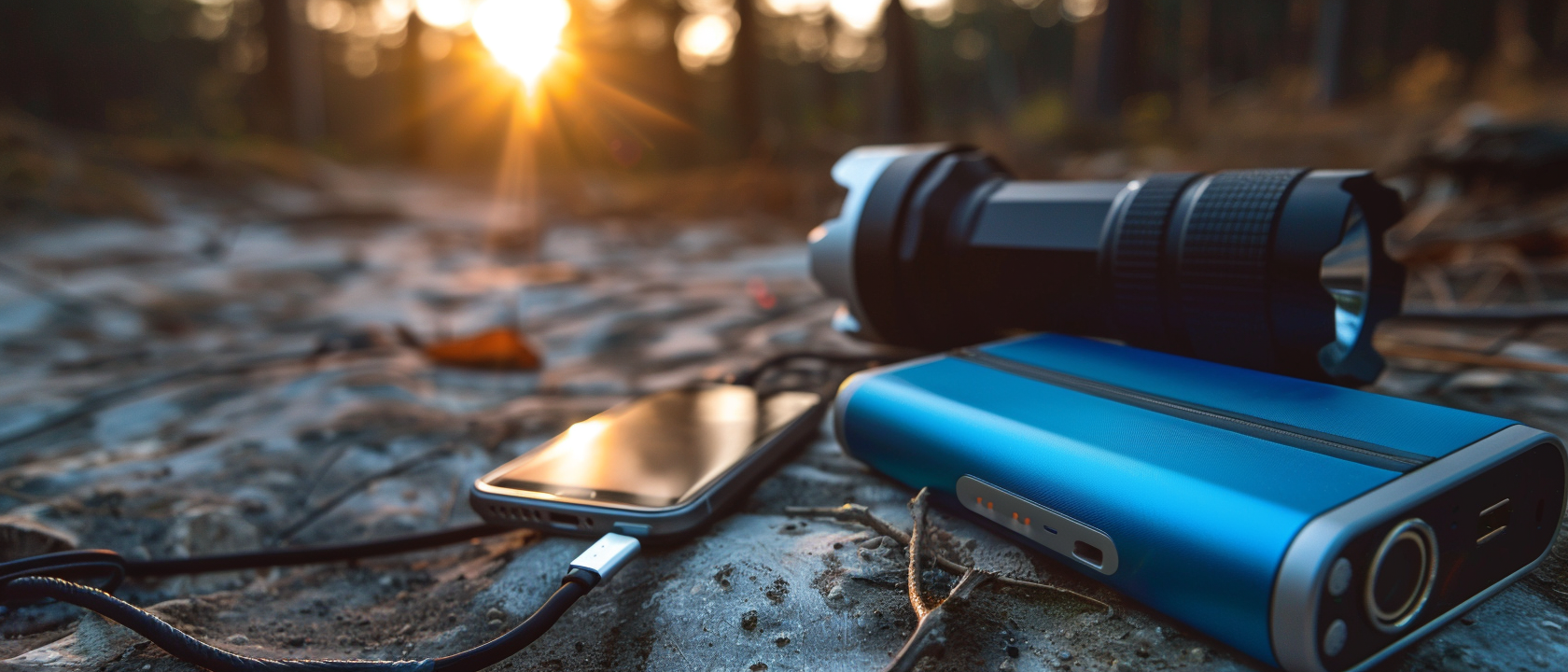
Best Power Banks for Bug Out Bags (Top 10)
Find the best power bank for your bug out bag. We compare capacity, durability, and charging options for keeping devices powered in emergencies.
Affiliate Disclosure: ZT1 Prep is reader-supported. When you buy through links on our site, we may earn an affiliate commission at no additional cost to you. This helps us keep creating practical preparedness content. Full disclosure.
How We Recommend Gear
ZT1 Prep is reader-supported. When you purchase through our links, we may earn a commission—at no extra cost to you. This supports our mission to provide practical, trustworthy preparedness guidance.
- We never let affiliate relationships influence our recommendations
- We recommend products we'd actually use ourselves
- We're honest about what we've tested vs. researched
Best Power Banks for Bug Out Bags (Top 10)
Your phone is a survival tool—GPS, communication, information, flashlight, and more. When the grid is down, a power bank keeps your devices alive. For your bug out bag, you need reliable backup power that balances capacity with weight.
Here are our top picks for BOB power banks.
Quick Picks
| Rank | Product | Best For | Capacity | Weight | Price Range |
|---|---|---|---|---|---|
| 1 | Anker PowerCore 10000 | Overall | 10,000mAh | 6.4 oz | $ |
| 2 | Goal Zero Venture 30 | Rugged | 7,800mAh | 9 oz | $$ |
| 3 | Nitecore NB10000 | Lightweight | 10,000mAh | 5.3 oz | $$ |
| 4 | Anker PowerCore 20000 | Capacity | 20,000mAh | 12.5 oz | $$ |
| 5 | BioLite Charge 40 PD | Fast Charging | 10,000mAh | 7.5 oz | $$ |
How Much Capacity Do You Need?
Quick math for phone charging:
- Modern smartphones have ~3,000-4,500mAh batteries
- A 10,000mAh power bank provides 2-3 full charges
- A 20,000mAh power bank provides 4-5 full charges
- Actual output is ~60-70% of rated capacity (energy loss)
For most 72-hour BOBs: 10,000mAh is the sweet spot—enough for several charges without excessive weight.
Note
Capacity alone doesn’t tell the whole story. Quality cells, efficient circuitry, and output wattage matter. A cheap 20,000mAh bank may perform worse than a quality 10,000mAh option.
Detailed Reviews
1. Anker PowerCore 10000 — Best Overall
Anker PowerCore 10000
Compact, reliable power bank with excellent capacity-to-weight ratio.
What We Like
- 10,000mAh capacity
- Very compact
- 2+ phone charges
- High quality cells
- 18-month warranty
Considerations
- Single USB-A port
- No fast charging input
- No display
ℹ️ Multiple versions - check for USB-C if needed
Check Price on AmazonAnker has built a reputation for reliable, reasonably-priced power banks. The PowerCore 10000 is their most popular model for good reason.
Why it wins:
- Perfect capacity for 72-hour scenarios
- Very lightweight at 6.4 oz
- Compact size (credit card footprint)
- Quality cells and circuitry
- Affordable price point
- Wide compatibility
Considerations:
- Not waterproof
- No solar charging
- Single USB-A output
- Not rugged enough for extreme use
Best for: Most bug out bags, everyday carry, general preparedness
2. Goal Zero Venture 30 — Best Rugged Option
Goal Zero Venture 30 Power Bank
Rugged, water-resistant power bank built for outdoor use.
Pros
- IPX67 waterproof
- Drop tested
- 7,800mAh capacity
Cons
- Lower capacity for size
- Higher price per mAh
ℹ️ Check if solar panel is included or sold separately
Check Price on AmazonWhen you need a power bank that can handle abuse, Goal Zero’s Venture line delivers.
Why we like it:
- IP67 waterproof (submersible)
- Drop-proof design
- Built-in flashlight
- Daisy-chain with Goal Zero solar panels
- Dual USB output
- Lanyard attachment point
Considerations:
- Lower capacity for weight
- More expensive
- Larger than non-rugged options
- Heavier at 9 oz for 7,800mAh
Best for: Harsh conditions, outdoor-focused BOBs, pairing with solar
3. Nitecore NB10000 — Best Ultralight
For weight-conscious builds, the Nitecore NB10000 offers premium capacity at minimal weight.
Why we like it:
- Only 5.3 oz (lightest 10,000mAh option)
- Carbon fiber shell
- USB-C with Power Delivery (18W)
- Premium build quality
- Compact design
Considerations:
- Higher price for capacity
- Not rugged
- Limited port options
- May be harder to find
Best for: Ultralight BOBs, weight-conscious builds, tech-forward users
4. Anker PowerCore 20000 — Best Capacity
When you need maximum runtime and can handle the weight, the PowerCore 20000 delivers.
Why we like it:
- 20,000mAh = 4-5 phone charges
- Dual USB output (charge two devices)
- Reliable Anker quality
- Reasonable price for capacity
- Good for families (charge multiple phones)
Considerations:
- Heavy at 12.5 oz
- Larger size
- Takes longer to recharge
- May be overkill for 72-hour scenarios
Best for: Extended scenarios, family BOBs, vehicle kits where weight matters less
5. BioLite Charge 40 PD — Best Fast Charging
USB-C Power Delivery (PD) charges modern phones significantly faster than standard USB-A.
Why we like it:
- 18W Power Delivery output
- Fast recharging input
- Quality construction
- Compact for features
- Good balance of speed and capacity
Considerations:
- Premium pricing
- Requires USB-C cable
- Not waterproof
- Some phones don’t support PD
Best for: USB-C users, those prioritizing charge speed, modern devices
Solar Charging: Worth It?
Many preppers consider solar panels to recharge their power banks indefinitely.
| Factor | Reality |
|---|---|
| Charging speed | Slow—full day of sun for partial charge |
| Reliability | Weather dependent |
| Weight/bulk | Adds significant pack weight |
| Best use case | Base camp, vehicle kit, long-term scenarios |
Our take: For 72-hour BOBs, a well-charged power bank is more practical than solar. Solar makes sense for extended scenarios or as a supplemental charging method.
If you want solar, Goal Zero’s Nomad panels pair well with their power banks.
Best Solar Chargers for Bug Out Bags
Pro Tip
Keep your power bank charged! A dead power bank is useless weight. Check and top off monthly. Consider keeping it in airplane mode until needed to preserve charge.
Capacity vs. Weight Analysis
| Capacity | Typical Weight | Phone Charges | Best For |
|---|---|---|---|
| 5,000mAh | 4-5 oz | 1-1.5 | Ultralight, get home bags |
| 10,000mAh | 6-7 oz | 2-3 | Most BOBs (recommended) |
| 20,000mAh | 12-14 oz | 4-5 | Extended scenarios, families |
| 26,800mAh | 16-18 oz | 5-6+ | Vehicle kits, home backup |
The sweet spot for most BOBs: 10,000mAh offers the best balance of capacity and weight.
What to Charge (Priority Order)
When power is limited, prioritize:
- Phone — Communication, GPS, information
- Headlamp/flashlight (if rechargeable) — Essential for night navigation
- Emergency radio (if rechargeable) — Information gathering
- GPS device (if separate) — Navigation backup
What NOT to waste power on: tablets, laptops, entertainment devices (unless they serve critical functions).
Our Recommendations
For Most Bug Out Bags
Anker PowerCore 10000 — Best balance of capacity, weight, and reliability. Affordable enough to have one in every bag.
For Harsh Conditions
Goal Zero Venture 30 — Worth the weight penalty if your BOB will face water, drops, or rough handling.
For Ultralight Builds
Nitecore NB10000 — Same capacity as the Anker at nearly an ounce less. Premium price but minimal weight.
For Families/Extended Scenarios
Anker PowerCore 20000 — More capacity for charging multiple devices. Consider this for vehicle kits or if weight isn’t a constraint.
Our Top Picks
| Product | Best For | Key Features | Price |
|---|---|---|---|
| Anker PowerCore 10000 Compact, reliable power bank with excellent capacity-to-weight ratio. | Get Home Bag EDC |
| Check Price |
| Goal Zero Venture 30 Power Bank Rugged, water-resistant power bank built for outdoor use. | Bug Out Bag Outdoor Use |
| Check Price |
Frequently Asked Questions
How long does a power bank hold its charge?
Can I bring power banks on airplanes?
Should I get a power bank with solar built-in?
USB-A or USB-C output?
Do I need a power bank if I have a hand-crank radio?
Related:
ZT1 Prep Team
Practical preparedness for real life
Related Guides
Best Emergency Food for Bug Out Bags (Top 10)
Find the best emergency food for your bug out bag. We compare ration bars, freeze-dried meals, and calorie-dense options for 72-hour preparedness.
gearBest Emergency Radios for Bug Out Bags (Top 10)
Find the best emergency radio for your bug out bag. We compare hand-crank, solar, and battery options for weather alerts and emergency communication.
gearBest Fire Starters for Bug Out Bags (Top 10)
Find the most reliable fire starters for your bug out bag. We compare lighters, ferro rods, and tinder to help you choose the right fire-starting kit.