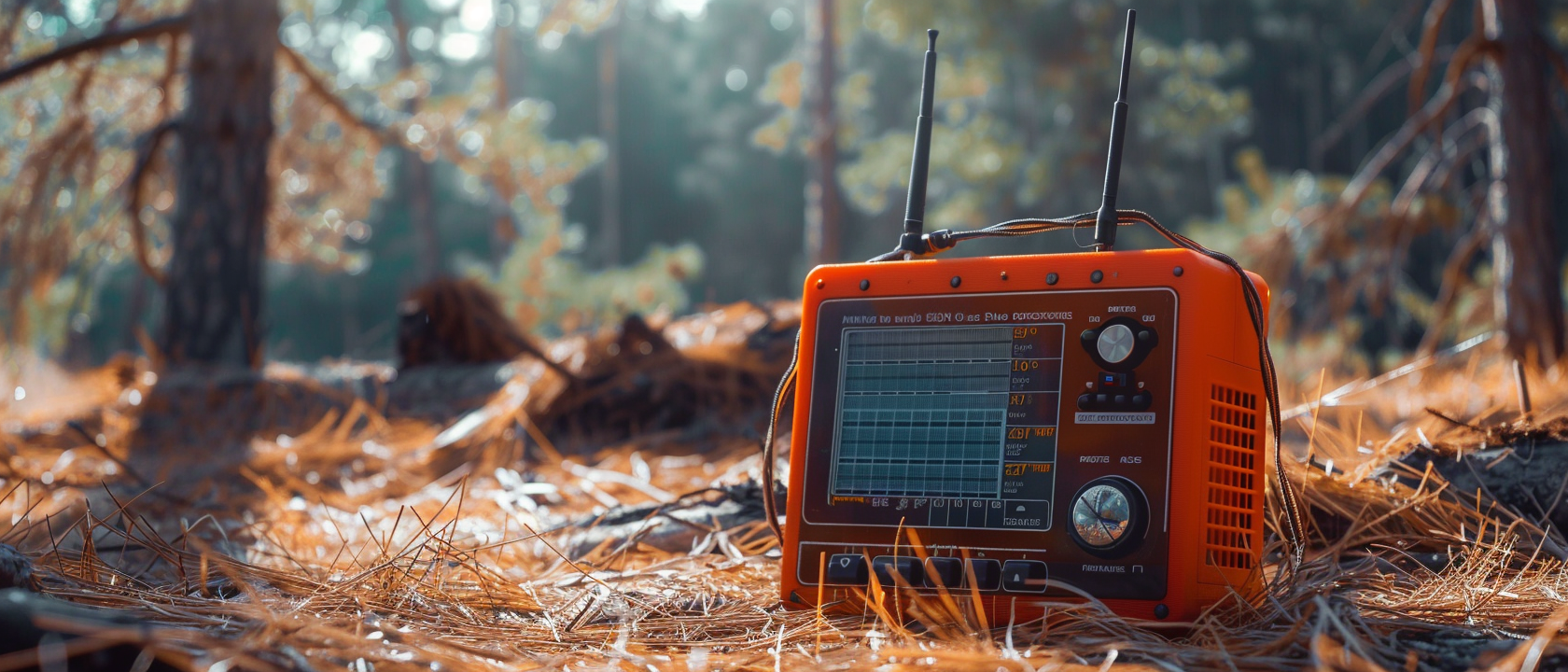
Best Emergency Radios for Bug Out Bags (Top 10)
Find the best emergency radio for your bug out bag. We compare hand-crank, solar, and battery options for weather alerts and emergency communication.
Affiliate Disclosure: ZT1 Prep is reader-supported. When you buy through links on our site, we may earn an affiliate commission at no additional cost to you. This helps us keep creating practical preparedness content. Full disclosure.
How We Recommend Gear
ZT1 Prep is reader-supported. When you purchase through our links, we may earn a commission—at no extra cost to you. This supports our mission to provide practical, trustworthy preparedness guidance.
- We never let affiliate relationships influence our recommendations
- We recommend products we'd actually use ourselves
- We're honest about what we've tested vs. researched
Best Emergency Radios for Bug Out Bags (Top 10)
In a crisis, information is survival. When cell towers are down and internet is unavailable, a weather/emergency radio connects you to NOAA weather alerts, emergency broadcasts, and critical updates. It’s one of the most practical items in your bug out bag.
Here are our top picks for BOB emergency radios.
Quick Picks
| Rank | Product | Best For | Power Sources | Weight | Price Range |
|---|---|---|---|---|---|
| 1 | Midland ER310 | Overall | Crank, Solar, USB, AA | 1.1 lb | $$ |
| 2 | Eton FRX3+ | Features | Crank, Solar, USB | 1 lb | $$ |
| 3 | RunningSnail MD-090P | Budget | Crank, Solar, USB, AAA | 0.7 lb | $ |
| 4 | Sangean MMR-88 | Audio Quality | Crank, USB | 0.9 lb | $$$ |
| 5 | Kaito KA500 | Maximum Features | Crank, Solar, USB, AA, AC | 1.3 lb | $$ |
What Makes a Good Emergency Radio?
For bug out and preparedness use, prioritize:
Multiple power sources — Hand crank, solar, batteries, and USB charging provide redundancy. You can’t count on any single power source in an emergency.
NOAA Weather Band — Access to all 7 NOAA weather channels with SAME (Specific Area Message Encoding) alerts.
AM/FM reception — Local news and information during regional emergencies.
Durability — Your radio may get dropped, wet, or dusty. Build quality matters.
Phone charging — Many emergency radios can charge phones via USB—useful when every percent of battery matters.
Note
NOAA Weather Radio broadcasts continuously from 1,000+ transmitters nationwide. Even in remote areas, you can usually receive weather and emergency alerts. It’s the backbone of emergency communication in the US.
Detailed Reviews
1. Midland ER310 — Best Overall
Midland ER310 Emergency Radio
Multiple power options including hand crank and solar. NOAA weather alerts.
What We Like
- 4 power sources
- NOAA weather alerts
- Built-in flashlight
- USB charging output
- SOS beacon
Considerations
- Crank is slow to charge
- Solar is supplemental only
- Antenna not replaceable
ℹ️ ER310 is newer than ER300 - verify model
Check Price on AmazonThe Midland ER310 hits the sweet spot of features, reliability, and value. It’s the emergency radio most recommended in preparedness communities.
Why it wins:
- Four power sources: hand crank, solar panel, USB rechargeable, AA batteries
- All 7 NOAA weather channels with SAME alerts
- 130-lumen flashlight and SOS strobe
- Ultrasonic dog whistle for signaling
- USB output for phone charging
- IPX4 water resistant
Considerations:
- Solar charging is slow (supplement for battery, not primary)
- Phone charging drains battery quickly
- Crank is effort for limited charge
Best for: Primary BOB radio, vehicle kits, home emergency kit
2. Eton FRX3+ — Best Feature Set
Eton has been making emergency radios for decades. The FRX3+ is their flagship model with premium build quality.
Why we like it:
- Hand crank, solar, USB rechargeable
- NOAA with SAME alerts
- LED flashlight and red SOS beacon
- Phone charging via USB
- Auxiliary input for additional audio
- Good audio quality
Considerations:
- No AA battery backup
- Premium price point
- Slightly bulky
Best for: Quality-focused users, home emergency stations
3. RunningSnail MD-090P — Best Budget
If you need an emergency radio without significant investment, the RunningSnail delivers core functionality at an entry-level price.
Why we like it:
- Very affordable (~$20-25)
- Hand crank, solar, USB, and AAA batteries
- NOAA weather band
- LED flashlight
- Phone charging capable
- Surprisingly capable for the price
Considerations:
- Build quality is lower than premium options
- Smaller solar panel (very slow charging)
- Audio quality is basic
- May not last as long under heavy use
Best for: Budget builds, backup radios, testing if you’ll use it
4. Sangean MMR-88 — Best Audio Quality
Sangean is known for audio quality. If you want a radio that sounds good, the MMR-88 delivers.
Why we like it:
- Superior audio quality
- Hand crank and USB rechargeable
- NOAA and AM/FM
- 19 hours of playback from full charge
- Compact size
- Premium build quality
Considerations:
- No solar panel
- No AA battery backup
- Higher price
- Fewer extra features (no flashlight)
Best for: Audio-focused users, home use, those who prioritize quality
5. Kaito KA500 — Most Features
The Kaito KA500 is the feature-packed option for those who want everything in one device.
Why we like it:
- Five power sources: crank, solar, USB, AA, and AC adapter
- NOAA, AM, FM, and shortwave bands
- LED flashlight and reading lamp
- Phone charging
- Headphone jack
- Multiple band options
Considerations:
- Larger and heavier
- More complex to operate
- Build quality varies
- May be more than needed for BOB use
Best for: Maximum features, home emergency station, shortwave enthusiasts
Power Source Comparison
| Power Source | Pros | Cons | Best For |
|---|---|---|---|
| Hand Crank | Always available | Tiring, slow charge | Emergency backup |
| Solar | Free energy | Slow, needs sun | Supplement charging |
| USB Rechargeable | Fast charge | Needs power source | Pre-emergency prep |
| AA/AAA Batteries | Instant power | Consumable, weight | Reliable backup |
Our recommendation: Choose a radio with at least three power options. USB for pre-charging, hand crank for emergencies, and AA batteries for reliable backup.
Pro Tip
Test your hand crank charging. Most radios require 3-5 minutes of cranking for 10-15 minutes of radio time. It’s more effort than you think—but knowing how it works matters when you need it.
Radio Features Worth Having
Essential:
- NOAA Weather Band (all 7 channels)
- AM/FM radio
- Multiple power sources
- LED flashlight
Very Useful:
- SAME alerts (automatic emergency warnings)
- USB phone charging output
- Water resistance
- SOS beacon/strobe
Nice to Have:
- Shortwave bands
- Auxiliary input
- Headphone jack
- Reading lamp
Emergency Radio vs. Two-Way Radio
| Feature | Emergency Radio | Two-Way Radio (FRS/GMRS) |
|---|---|---|
| Receive broadcasts | Yes | No |
| Send messages | No | Yes |
| Weather alerts | Yes | Some models |
| Talk to others | No | Yes |
| License required | No | GMRS requires license |
| Best use | Information gathering | Group communication |
Our recommendation: For BOB use, start with an emergency radio for receiving information. Add two-way radios if you need group communication. They serve different purposes.
Emergency Radio vs. Two-Way: Which to Pack?
Our Recommendations
For Most Bug Out Bags
Midland ER310 — Best balance of features, reliability, and value. The four power sources ensure you can always get information.
On a Budget
RunningSnail MD-090P — Core functionality at minimal cost. Good enough for emergency use, and the price allows you to put one in multiple locations.
For Home Emergency Station
Eton FRX3+ or Kaito KA500 — More features than you need in a BOB, but ideal for home use where weight and size don’t matter.
For Get Home Bags
Consider whether you need a radio. Your phone may be sufficient for shorter scenarios. If you want one, the RunningSnail’s compact size and low weight make sense.
Frequently Asked Questions
Can emergency radios replace my phone?
How long does hand-crank charging last?
What is SAME and why does it matter?
Should I get a shortwave radio?
Will solar charging keep my radio powered?
Related:
ZT1 Prep Team
Practical preparedness for real life
Related Guides
Best Emergency Food for Bug Out Bags (Top 10)
Find the best emergency food for your bug out bag. We compare ration bars, freeze-dried meals, and calorie-dense options for 72-hour preparedness.
gearBest Fire Starters for Bug Out Bags (Top 10)
Find the most reliable fire starters for your bug out bag. We compare lighters, ferro rods, and tinder to help you choose the right fire-starting kit.
gearBest First Aid Kits for Bug Out Bags (Top 10)
Find the best first aid kit for your bug out bag. We compare trauma kits, compact options, and what to add for wilderness and emergency medical needs.