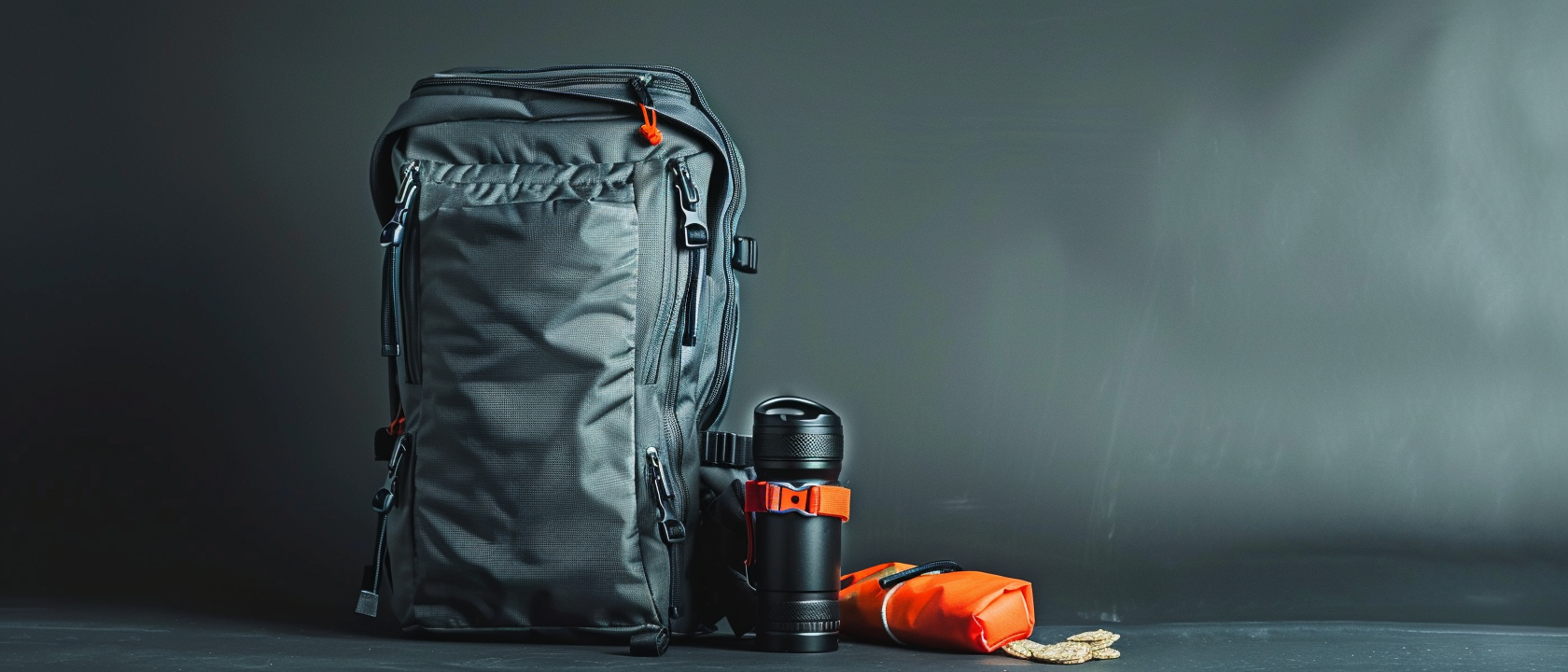
How to Build a Get Home Bag: Complete Beginner Guide + Checklist
Build a compact get home bag to help you reach home during emergencies. Lightweight essentials, urban considerations, and a printable checklist.
Affiliate Disclosure: ZT1 Prep is reader-supported. When you buy through links on our site, we may earn an affiliate commission at no additional cost to you. This helps us keep creating practical preparedness content. Full disclosure.
How to Build a Get Home Bag: Complete Beginner Guide
A get home bag (GHB) is a compact kit that helps you travel from wherever you are—work, school, the store—back to your home during an emergency. It’s lighter and more portable than a bug out bag, focused on one goal: getting you home safely.
Think of it as insurance for your commute. When public transit stops, roads gridlock, or you need to travel on foot, your GHB has what you need.
What Is a Get Home Bag?
A get home bag is a portable kit designed to help you travel from your location back home during disruptions. Unlike a bug out bag (which prepares you to leave home), a GHB assumes home is your destination.
Key characteristics:
- Compact — Small enough for your car trunk, desk drawer, or locker
- Lightweight — 5-15 lbs, comfortable for extended walking
- Focused — Essentials for 12-24 hours of travel
- Everyday ready — Stored where you spend time away from home
Who Needs a Get Home Bag?
Consider building a GHB if you:
- Commute more than 10 miles from home
- Work in an urban area with traffic/transit dependency
- Spend extended time away from home regularly
- Have family members who depend on you getting home
- Live in an area with earthquake, weather, or infrastructure risks
Distance Matters
If you work 5 miles from home, you could walk it in 2 hours. If you work 30 miles away, you need more supplies for what could be a full day or longer journey.
Get Home Bag vs. Bug Out Bag
| Feature | Get Home Bag | Bug Out Bag |
|---|---|---|
| Primary purpose | Get home | Leave home |
| Typical weight | 5-15 lbs ✓ | 15-35 lbs |
| Duration | 12-24 hours | 72+ hours |
| Storage location | Car, office, locker | At home |
| Portability | Very portable ✓ | Moderate |
| Contents | Compact essentials | Full survival kit |
Bottom line: A GHB is smaller and lighter because you’re traveling to safety (home), not away from it. You don’t need full survival gear—you need enough to complete your journey.
The Core Categories of a Get Home Bag
1. Water & Hydration
Dehydration slows you down and clouds your thinking. Even a 12-hour walk requires significant water.
Pack:
- 1 liter of water (minimum)
- Compact water filter or purification tablets
- Collapsible water bottle for resupply
LifeStraw Personal Water Filter
Iconic straw-style water filter. Simple, reliable, and perfect for emergency kits.
Pros
- Extremely simple to use
- No batteries or moving parts
- Compact and lightweight
Cons
- Can't store filtered water
- Must drink directly from source
ℹ️ Verify authenticity - buy from authorized sellers only
Check Price on AmazonTip: Urban environments usually have water sources (fountains, restaurants, gas stations). A filter lets you use them safely.
2. Shelter & Warmth (Compact)
You may need to rest, wait out bad weather, or spend an unexpected night out.
Pack:
- Emergency bivvy (weighs 3-4 oz)
- Compact rain poncho
- Extra layer (packable jacket or fleece)
- Emergency blanket (backup)
SOL Emergency Bivvy
Reflective emergency bivvy that retains 90% of body heat. Essential for every bag.
Urban consideration: Bridges, parking garages, and building overhangs provide partial shelter. Your bivvy handles the rest.
3. Light
Days can turn to night mid-journey. Proper lighting keeps you moving safely.
Pack:
- Small flashlight OR headlamp
- Extra batteries
- Keychain light as backup
Petzl Actik Core Headlamp
Rechargeable headlamp with excellent battery life and red light mode.
Headlamps win for GHBs—hands-free operation matters when you’re walking and navigating.
4. First Aid (Compact)
Focus on the injuries most likely during extended walking: blisters, minor cuts, and soreness.
Pack:
- Compact first aid kit
- Extra blister care (moleskin is essential)
- Pain relievers
- Personal medications (3+ day supply)
Adventure Medical Kits Ultralight .7
Well-organized ultralight first aid kit designed for 1-2 people.
Pros
- Organized pouches
- DryFlex bags waterproof
- Lightweight (5.6 oz)
Cons
- May need to supplement
- Basic supplies only
ℹ️ Multiple sizes available - .7 is for 1-2 people
Check Price on AmazonWarning
Blisters can stop your journey. Quality footwear and blister prevention/treatment are critical for any GHB.
5. Tools
Keep it simple—a small multitool handles most GHB needs.
Pack:
- Compact multitool OR Swiss Army knife
- Small amount of duct tape (wrapped around a card)
- Zip ties
- Small flashlight (if not in lighting category)
Victorinox Swiss Army Huntsman
Classic Swiss Army knife with wood saw. Great balance of tools and portability.
Pros
- 15 functions
- Includes wood saw
- Very portable
Cons
- Locking blade illegal some places
- No pliers
ℹ️ Many variations - ensure you get genuine Victorinox
Check Price on AmazonNote: Check local laws. Some cities restrict knife blade lengths.
6. Food & Energy
You’re not living off this food—just maintaining energy for your journey.
Pack:
- 1,200-2,000 calories of compact food
- Energy bars, nuts, dried fruit
- Hard candy (morale and quick energy)
- Electrolyte packets
Keep it simple: Calorie-dense, no-cook foods that won’t melt, freeze, or spoil in your car/office.
7. Communication & Power
Your phone is your navigation, communication, and information tool. Keep it powered.
Pack:
- Power bank (10,000mAh minimum)
- Charging cable
- Small emergency radio (optional)
- Whistle for signaling
- Written contacts and addresses
Anker PowerCore 10000
Compact, reliable power bank with excellent capacity-to-weight ratio.
Pros
- 10,000mAh capacity
- Very compact
- 2+ phone charges
Cons
- Single USB-A port
- No fast charging input
ℹ️ Multiple versions - check for USB-C if needed
Check Price on Amazon8. Navigation
Your phone helps, but don’t depend on it exclusively.
Pack:
- Local/regional maps (paper)
- Know your route home (multiple options)
- Compass (if traveling through unfamiliar areas)
Pre-plan: Walk or drive your route home. Identify landmarks, safe stopping points, and alternate routes.
9. Cash & Documents
Infrastructure failures often mean no card payments.
Pack:
- $50-100 in small bills
- Coins for vending machines
- Copy of ID
- Emergency contacts (written)
10. Comfort & Clothing
Comfort keeps you moving. Discomfort slows you down.
Pack:
- Comfortable walking shoes (if not wearing them)
- Extra socks (game-changer)
- Bandana or buff (multiple uses)
- Sunglasses
- Small hygiene items (wet wipes, toilet paper)
Footwear Is Critical
If you wear dress shoes or heels to work, keep a pair of broken-in walking shoes in your GHB. Nothing stops a journey faster than foot pain.
Get Home Bag Checklist
Get Home Bag Essentials
- Water bottle (1 liter) Essential
- Water filter or purification tabs Recommended
- Emergency bivvy Essential
- Rain poncho Recommended
- Extra warm layer Recommended
- Headlamp or flashlight Essential
- Extra batteries Recommended
- Compact first aid kit Essential
- Blister care (moleskin) Essential
- Personal medications Essential
- Pain relievers Recommended
- Multitool or knife Essential
- Energy bars (1,200+ calories) Essential
- Power bank Essential
- Phone charger Essential
- Local maps Recommended
- Cash ($50-100) Essential
- ID copy Recommended
- Walking shoes Essential
If not wearing them
- Extra socks Recommended
- Whistle Optional
Weight Target
Your GHB should stay between 5-15 lbs—light enough to carry comfortably for hours of walking.
| Commute Distance | Suggested Weight | Notes |
|---|---|---|
| Under 10 miles | 5-8 lbs | Minimal kit, focus on speed |
| 10-25 miles | 8-12 lbs | Full GHB essentials |
| 25+ miles | 12-15 lbs | Extended supplies, possible overnight |
Test it: Put on your loaded GHB and walk 2-3 miles. If it’s uncomfortable, lighten the load.
Storage Locations
Your GHB only works if it’s with you when you need it.
Best locations:
- Car trunk — Most common, always with you during commute
- Office desk/locker — If you don’t drive or park far away
- Divided between car and office — Core items in both locations
Rotation tip: Check your GHB monthly if stored in a hot or cold vehicle. Extreme temperatures degrade some items.
Urban vs. Suburban vs. Rural Considerations
Urban GHB Additions
- Transit maps and schedules
- Building entry tools (work ID, keys)
- Extra cash for taxis or services
- Gray/neutral bag (don’t draw attention)
Suburban GHB Additions
- More water (longer distances between sources)
- Better footwear for varied terrain
- Reflective gear for road walking
Rural GHB Additions
- Larger water capacity
- More substantial shelter
- Navigation tools (compass, detailed maps)
- Approaches a small BOB in scope
Scenarios: How Your GHB Helps
Scenario 1: Major earthquake Transit is down, roads are damaged. You grab your GHB and walk home using pre-planned routes, stopping to rest and hydrate. Your bivvy keeps you warm if you need to shelter overnight.
Scenario 2: Severe winter storm Your car slides off the road or traffic is completely stopped. Your GHB provides warmth, light, food, and communication while you wait for help or decide to walk.
Scenario 3: Civil unrest or infrastructure failure Normal transportation isn’t safe or available. Your GHB lets you avoid crowds, take indirect routes, and travel self-sufficiently.
Scenario 4: Extended power outage Your workplace loses power and sends everyone home. Transit isn’t running, traffic lights are out. Your GHB helps you navigate the chaos.
Mistakes to Avoid
Packing too much. This isn’t a BOB. You’re getting home, not surviving in the wilderness. Keep it light.
Forgetting comfortable footwear. If you can’t walk comfortably, you can’t get home.
Ignoring maintenance. Check your GHB seasonally. Rotate food. Charge your power bank.
No route planning. Know multiple ways home. Highways might be blocked; have alternatives.
Over-tactical appearance. A gray or black backpack blends in. Military-style bags attract attention.
Maintenance Schedule
| Task | Frequency |
|---|---|
| Check power bank charge | Monthly |
| Rotate water in hot climates | Monthly |
| Check food/medication dates | Every 3 months |
| Adjust for seasonal clothing | Spring and fall |
| Full review and test | Yearly |
Frequently Asked Questions
How is a GHB different from an EDC (Everyday Carry)?
Should I keep a GHB in my car and my office?
What if I take public transit?
How much should a GHB cost?
Can my GHB double as my EDC bag?
Related Guides:
ZT1 Prep Team
Practical preparedness for real life
Related Guides
How to Build a Bug Out Bag: Complete Beginner Guide + Checklist
Learn how to build a bug out bag from scratch. Complete checklist, packing priorities, weight guidance, and beginner-friendly gear recommendations.
guidesHam Radio Licensing for Preppers: Complete Beginner Guide
Learn how to get your ham radio license for emergency communications. We cover Technician, General, and Extra classes, exam prep, and recommended radios.
guidesEveryday Readiness: Start Here (Zero to One)
New to preparedness? Start here. Learn practical, calm steps to go from zero readiness to confidently prepared—no fear-mongering, just what works.