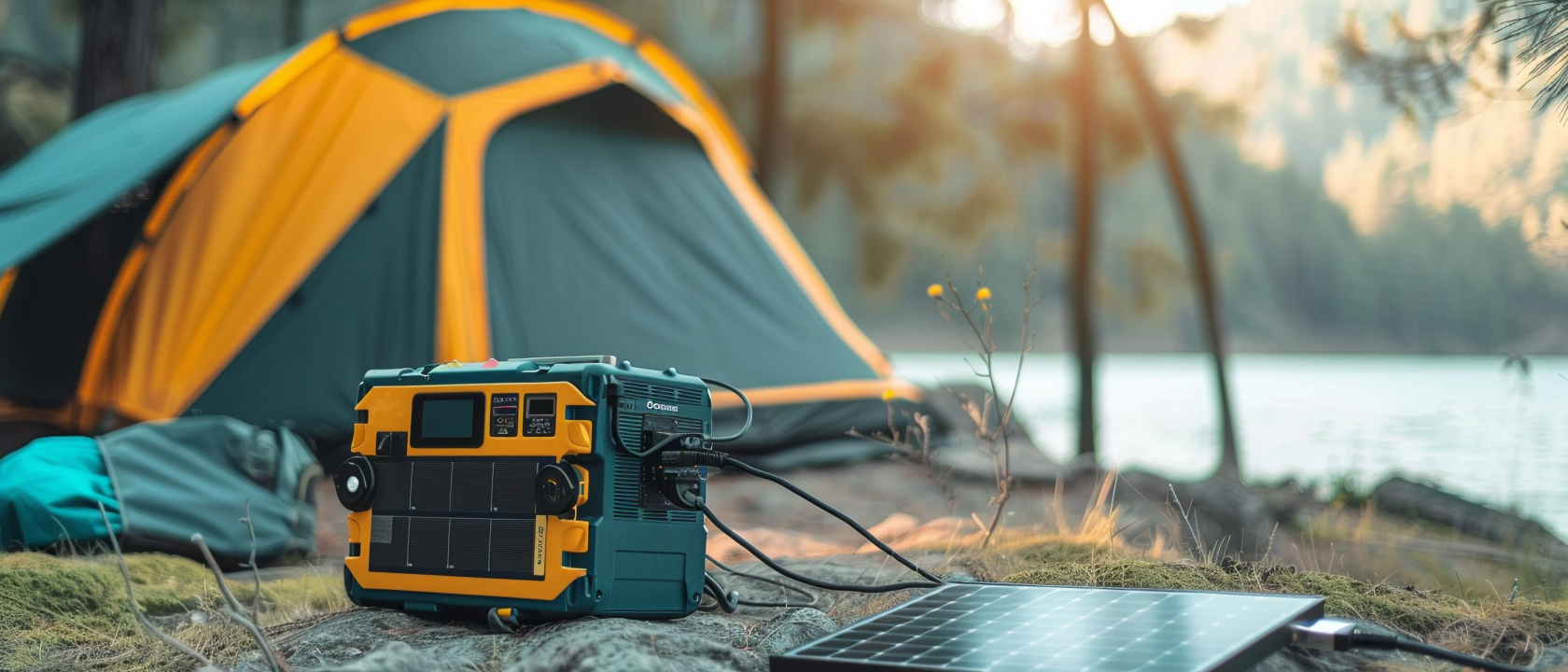
Best Portable Power Stations for Emergency Preparedness
Top portable power stations and solar panels for power outages. Compare capacity, output, and solar charging for emergency backup power in 2025.
Affiliate Disclosure: ZT1 Prep is reader-supported. When you buy through links on our site, we may earn an affiliate commission at no additional cost to you. This helps us keep creating practical preparedness content. Full disclosure.
Best Portable Power Stations for Emergency Preparedness
Portable power stations have revolutionized emergency preparedness. These battery packs with built-in inverters let you run laptops, charge phones, power medical devices, and even run small appliances during outages—all without the noise, fumes, or fuel storage of gas generators.
This guide covers the best power stations for emergency use, from compact phone chargers to home backup units.
Quick Recommendations
| Need | Recommendation | Capacity |
|---|---|---|
| Best Value | Jackery Explorer 300 | 293Wh |
| Best Overall | EcoFlow River 2 Pro | 768Wh |
| Budget Pick | Bluetti EB3A | 268Wh |
| Home Backup | Goal Zero Yeti 1000X | 983Wh |
Understanding Power Station Specs
Before buying, understand these key specifications:
Watt-Hours (Wh) — Total energy storage. More Wh = longer runtime.
Watts (W) Output — How much power it can deliver at once. Must exceed your device’s draw.
Pure Sine Wave — Clean power safe for sensitive electronics (all quality stations have this).
Cycles — How many full charge/discharge cycles before capacity degrades (typically 500-2000).
Capacity Guide
| Capacity | Powers | Duration |
|---|---|---|
| 200-300Wh | Phones, tablets, lights | 2-3 days basic use |
| 500-700Wh | Laptop, CPAP, mini fridge | 1-2 days moderate use |
| 1000Wh+ | Refrigerator, multiple devices | 12-24 hrs heavy use |
Pro Tip
Calculate your needs: Add up the watts of devices you’ll run simultaneously. Your power station’s continuous output must exceed this total. Then multiply watts × hours to estimate required Wh capacity.
Top Power Stations for Emergency Prep
EcoFlow River 2 Pro — Best Overall
EcoFlow River 2 Pro Power Station
768Wh portable power station with fast charging (0-100% in 70 min) and LFP battery chemistry.
Pros
- 768Wh capacity
- 70-minute full charge
- LFP battery (3000+ cycles)
Cons
- Premium price
- 17+ lbs weight
ℹ️ River 2 Pro vs River 2 - Pro has larger capacity
Check Price on AmazonThe River 2 Pro hits the sweet spot of capacity, features, and price. Fast charging (0-100% in 70 minutes from wall power) means you can top off even during brief power restoration.
Specs:
- Capacity: 768Wh
- Output: 800W (1600W surge)
- Weight: 17.4 lbs
- Charging: Wall (70 min), solar, car
- Outlets: 4 AC, 3 USB-A, 2 USB-C, 1 car port
- Cycles: 3000+ (LFP battery)
Standout features:
- X-Boost handles devices up to 1600W
- LFP battery lasts 10+ years
- Phone app for monitoring
- Expandable with extra battery
Best for: Most households, balanced needs
Jackery Explorer 300 — Best Value
Jackery Explorer 300 Portable Power Station
Portable power station with AC outlet. Powers small appliances during outages.
Pros
- 293Wh capacity
- Pure sine wave AC
- Multiple output ports
Cons
- Heavy (7.1 lbs)
- Not for high-draw devices
ℹ️ Solar panel sold separately - check bundles
Check Price on AmazonThe Explorer 300 delivers reliable performance at an entry-level price. It won’t run a refrigerator, but it handles phones, lights, laptops, and small devices perfectly.
Specs:
- Capacity: 293Wh
- Output: 300W (500W surge)
- Weight: 7.1 lbs
- Charging: Wall (2 hrs), solar (5-6 hrs with 100W panel), car
- Outlets: 2 AC, 1 USB-C, 1 USB-A, 1 car port
- Cycles: 500+
Standout features:
- Extremely portable at 7.1 lbs
- Pure sine wave output
- Pairs with Jackery SolarSaga panels
- Clear LCD display
Best for: Budget-conscious, phone/laptop charging, portable needs
Bluetti EB3A — Budget Pick
Bluetti EB3A Portable Power Station
Compact 268Wh power station with 600W output and LFP battery. Great value entry point.
Pros
- 600W output (impressive for size)
- LFP battery (2500+ cycles)
- Wireless charging pad
Cons
- 268Wh limits runtime
- 10 lbs still notable
ℹ️ EB3A is current budget model
Check Price on AmazonBluetti’s EB3A packs impressive features into an affordable package. The 600W output handles more devices than competitors at this price point.
Specs:
- Capacity: 268Wh
- Output: 600W (1200W surge)
- Weight: 10.1 lbs
- Charging: Wall (2 hrs), solar, car
- Outlets: 2 AC, 2 USB-A, 1 USB-C, wireless charging pad
- Cycles: 2500+ (LFP battery)
Standout features:
- 600W output in a sub-300Wh unit
- LFP battery chemistry
- Built-in wireless charging pad
- Compact design
Best for: Budget buyers who need higher output
Goal Zero Yeti 1000X — Best for Home Backup
Goal Zero Yeti 1000X Power Station
983Wh power station capable of running refrigerators and power tools. Expandable capacity.
Pros
- 983Wh capacity
- 1500W output (3000W surge)
- Runs full-size refrigerators
Cons
- Heavy (31.7 lbs)
- Premium price
ℹ️ Yeti 1000X vs older Yeti 1000 - X has better ports
Check Price on AmazonWhen you need serious capacity for extended outages, the Yeti 1000X delivers. It can run a refrigerator for 10+ hours or power essential devices for days.
Specs:
- Capacity: 983Wh
- Output: 1500W (3000W surge)
- Weight: 31.7 lbs
- Charging: Wall (4 hrs), solar, car
- Outlets: 2 AC, 2 USB-A, 2 USB-C, 2 12V ports
- Cycles: 500+
Standout features:
- Can run refrigerators and power tools
- Chainable with expansion batteries
- Roll cart available for moving
- 10+ year lifespan
Best for: Home backup, medical devices, extended outages
Comparison Table
| Model | Price | Capacity | Output | Weight | Fast Charge | Cycles | Best For |
|---|---|---|---|---|---|---|---|
| EcoFlow River 2 Pro | $499 | 768Wh | 800W | 17.4 lbs | 70 min | 3000+ | Best overall |
| Jackery Explorer 300 | $299 | 293Wh | 300W | 7.1 lbs | 2 hrs | 500+ | Best value |
| Bluetti EB3A | $249 | 268Wh | 600W | 10.1 lbs | 2 hrs | 2500+ | Budget pick |
| Goal Zero Yeti 1000X | $1,200 | 983Wh | 1500W | 31.7 lbs | 4 hrs | 500+ | Home backup |
Solar Panels for Emergency Power
Pair your power station with solar panels for indefinite power during extended outages.
Recommended Solar Panels
| Panel | Watts | Weight | Best Paired With |
|---|---|---|---|
| Jackery SolarSaga 100 | 100W | 10.3 lbs | Jackery Explorer series |
| Goal Zero Nomad 50 | 50W | 9.5 lbs | Goal Zero Yeti series |
| EcoFlow 220W Bifacial | 220W | 20.7 lbs | EcoFlow River series |
| Bluetti PV200 | 200W | 14.3 lbs | Any MC4-compatible |
Note
Solar charging reality check: A 100W panel produces 100W only in perfect conditions. Expect 60-80W actual output. Cloud cover drops this to 10-30W. Plan conservatively.
Solar Charging Math
To fully charge a 500Wh power station with a 100W panel:
- Ideal conditions: 500Wh ÷ 100W = 5 hours
- Realistic conditions: 500Wh ÷ 70W = 7-8 hours
- Cloudy day: May not fully charge at all
Recommendation: Get panels with combined wattage equal to or greater than your power station’s capacity divided by 5. For a 500Wh station, aim for 100W+ of solar.
Battery Chemistry: LFP vs. NMC
Modern power stations use one of two battery types:
LFP (Lithium Iron Phosphate):
- 2500-3000+ cycles
- Safer, more stable
- Heavier per Wh
- Better for permanent home backup
- Examples: Bluetti EB3A, EcoFlow River 2 Pro
NMC (Lithium Nickel Manganese Cobalt):
- 500-1000 cycles
- Lighter weight
- Better for portable use
- Less expensive
- Examples: Jackery Explorer, older Goal Zero
Pro Tip
For emergency preparedness, prioritize LFP batteries. The extra cycle life means your investment lasts 10+ years instead of 3-5. The weight difference rarely matters for home backup.
What Can You Run?
| Device | Typical Watts | 300Wh Runtime | 1000Wh Runtime |
|---|---|---|---|
| Phone charging | 10-20W | 15+ charges | 50+ charges |
| Laptop | 50-100W | 3-6 hrs | 10-20 hrs |
| CPAP machine | 30-60W | 5-10 hrs | 15-30 hrs |
| LED lantern | 5-15W | 20-60 hrs | 70-200 hrs |
| Mini fridge | 40-60W | 5-7 hrs | 15-25 hrs |
| Full-size fridge | 100-200W | 1-3 hrs | 5-10 hrs |
| TV (LED 50”) | 60-100W | 3-5 hrs | 10-15 hrs |
Maintenance and Storage
Keep your power station ready:
- Store at 50-80% charge — Full or empty storage degrades batteries
- Charge every 3 months — Prevents deep discharge
- Store in cool location — Heat accelerates degradation
- Test quarterly — Verify it powers your devices
- Update firmware — Smart stations receive updates
- Keep solar panels clean — Dirty panels lose 10-25% efficiency
Power Station vs. Gas Generator
| Factor | Power Station | Gas Generator |
|---|---|---|
| Noise | Silent | 50-70+ dB |
| Indoor use | Yes | NO (carbon monoxide) |
| Fuel storage | None | Requires gasoline |
| Maintenance | Minimal | Oil changes, carb cleaning |
| Runtime | Hours (rechargeable) | Days (with fuel) |
| Initial cost | $200-2000 | $300-1000 |
| Output | 300-3000W typical | 1000-10000W |
When to choose a gas generator: Extended outages where you need to run high-wattage appliances (full-size fridge, sump pump, well pump) for days. Power stations can’t match sustained high output.
When to choose a power station: Most outages, apartments/condos, quiet operation needed, no fuel storage, sensitive electronics, portability.
Frequently Asked Questions
Can a power station run a refrigerator?
How long do power stations last?
Can I charge a power station while using it?
What size power station for CPAP?
Are cheap power stations safe?
Sources
- Sensible Prepper - Power Station Reviews
- The Prepared - Best Portable Power Stations
- Project Solar - Solar Generator Guide
- EcoFlow Learn - Power Station Basics
Related:
ZT1 Prep Team
Practical preparedness for real life
Related Guides
Best Rechargeable Lanterns for Emergency Preparedness
Top rechargeable lanterns and lights for power outages and emergencies. USB charging, solar options, and long runtime picks for 2025.
gearBest Portable Generators for Home Backup Power
Top portable generators for power outages and emergencies. Compare inverter vs conventional, wattage needs, and our picks for home backup in 2025.
comparisonsGenerator vs Power Station: Which Is Right for Emergency Backup?
Compare portable generators and battery power stations for emergency preparedness. Learn which backup power solution fits your needs, budget, and situation.