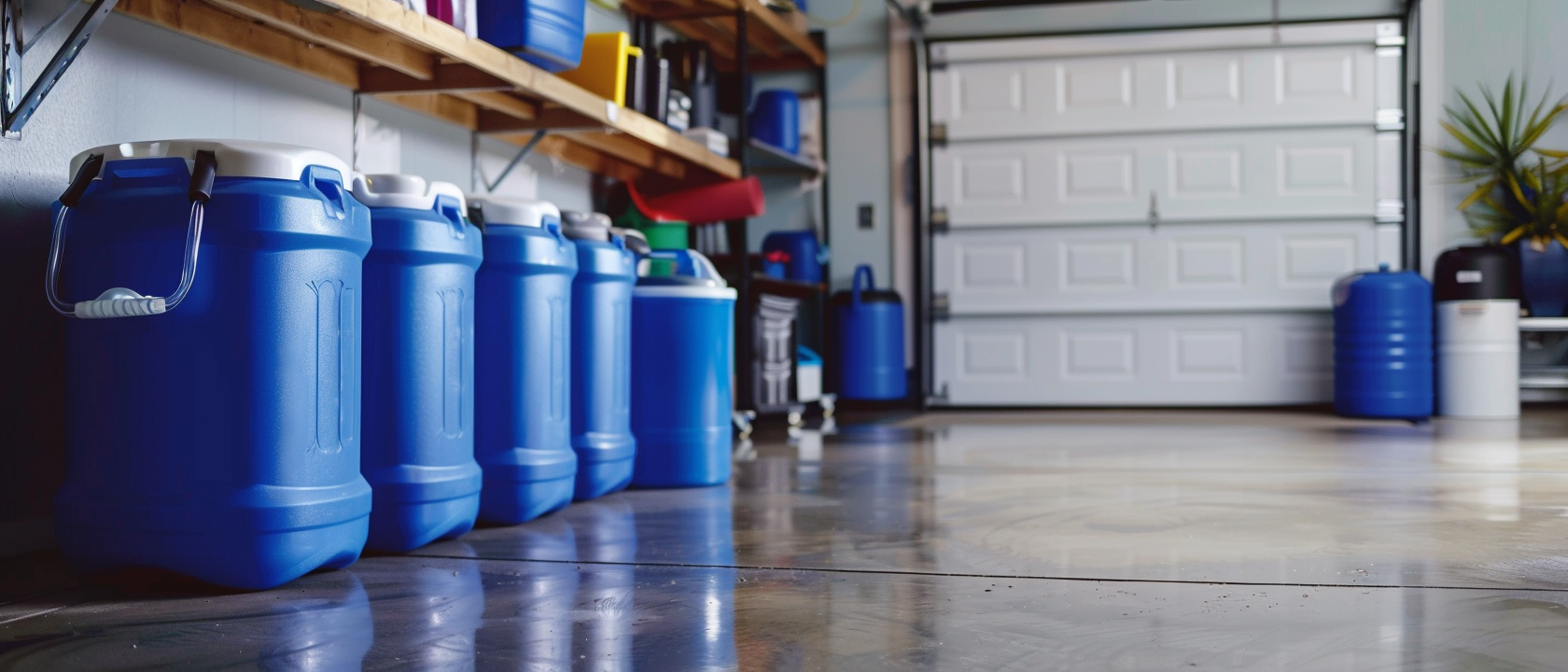
Home Water Storage: Complete Guide for Emergency Preparedness
How to store water at home for emergencies. Containers, treatment, rotation, and how much water you actually need for your family.
Affiliate Disclosure: ZT1 Prep is reader-supported. When you buy through links on our site, we may earn an affiliate commission at no additional cost to you. This helps us keep creating practical preparedness content. Full disclosure.
Home Water Storage: Complete Guide for Emergency Preparedness
Water is your most critical emergency supply. You can survive weeks without food but only days without water. Yet most households have less than a day’s supply on hand.
This guide covers everything you need to store water at home: how much, what containers, treatment, and rotation schedules.
How Much Water Do You Need?
FEMA recommends: 1 gallon per person per day for drinking and sanitation.
Reality: You’ll want more.
| Use | Daily Need |
|---|---|
| Drinking | 0.5-1 gallon |
| Cooking | 0.5 gallon |
| Basic hygiene | 0.5 gallon |
| Minimum total | 1 gallon |
| Comfortable total | 2 gallons |
Storage targets:
- 3 days (minimum): 3 gallons per person
- 2 weeks (recommended): 14 gallons per person
- 1 month (prepared): 30 gallons per person
Warning
Don’t forget pets, infants (formula requires more water), and medical needs. Hot climates and physical activity increase requirements significantly—plan for 2+ gallons per person.
Calculate Your Household Needs
| People | 3-Day Supply | 2-Week Supply | 1-Month Supply |
|---|---|---|---|
| 1 | 3 gallons | 14 gallons | 30 gallons |
| 2 | 6 gallons | 28 gallons | 60 gallons |
| 4 | 12 gallons | 56 gallons | 120 gallons |
| 6 | 18 gallons | 84 gallons | 180 gallons |
Water Storage Containers
Best Containers for Home Storage
Food-grade plastic containers are the standard choice. Look for HDPE (recycle code 2) or PET (recycle code 1).
Reliance Aqua-Tainer 7 Gallon
Stackable 7-gallon water container with spigot. Standard for home water storage.
Pros
- 7 gallon capacity
- Built-in spigot
- Stackable design
Cons
- Can develop leaks over time
- Spigot is basic
ℹ️ Blue tint helps prevent algae growth
Check Price on AmazonThe 7-gallon Aqua-Tainer is the workhorse of home water storage. Stackable, affordable, and includes a spigot.
Other excellent options:
| Container | Capacity | Best For |
|---|---|---|
| Reliance Aqua-Tainer | 7 gallons | Stackable storage |
| 55-gallon drum | 55 gallons | Large-volume storage |
| WaterBrick | 3.5 gallons | Modular, portable |
| Bottled water cases | 2.5-5 gallons | Grab-and-go |
Emergency Bathtub Storage
AquaPod Kit Emergency Water Storage
65-gallon bathtub water storage bladder. Fill before storms hit.
Pros
- 65 gallon capacity
- Stores in bathtub
- Food-grade liner
Cons
- Single use
- Requires advance warning
ℹ️ Fill before emergency - not for ongoing storage
Check Price on AmazonWhen you have advance warning (hurricanes, winter storms), fill your bathtub with 65-100 gallons using a bathtub bladder.
How it works:
- Place bladder in clean bathtub
- Attach to faucet and fill
- Use included pump to dispense
- Single use—dispose after emergency
Pro Tip
Keep a bathtub bladder (AquaPod or WaterBOB) ready even if you have other storage. It’s cheap insurance that nearly doubles most households’ water supply with 5 minutes of work.
Containers to Avoid
Don’t use:
- Milk jugs (proteins breed bacteria)
- Non-food-grade plastics
- Metal containers (rust, chemicals)
- Glass (breakage, weight)
- Previously held chemicals
Water Treatment for Storage
Municipal tap water is already treated and safe to store directly. Well water should be treated before storage.
Option 1: Store Tap Water As-Is
If your water comes from a chlorinated municipal supply:
- Fill clean containers with tap water
- Cap tightly
- Store in cool, dark location
- Rotate every 6-12 months
The residual chlorine keeps water safe for months.
Option 2: Add Water Preserver
Water Preserver Concentrate
Extends water storage life to 5 years. EPA registered treatment for emergency water supplies.
Pros
- 5-year storage extension
- EPA registered
- Easy to use
Cons
- Still recommend rotation
- Adds slight taste
ℹ️ One bottle treats 55 gallons
Check Price on AmazonWater preserver concentrate extends storage life to 5 years by adding extra chlorine that remains stable over time.
Usage: Add to water at recommended dose, seal containers.
Option 3: Treat Well Water
Well water lacks chlorine. Before storage:
- Add 1/8 teaspoon (8 drops) unscented bleach per gallon
- OR use water preserver concentrate
- Let stand 30 minutes before sealing
Filtering vs. Storing
Storage and filtration serve different purposes:
Stored water: Pre-treated, ready to drink immediately.
Water filters: Turn questionable water safe (streams, rainwater, compromised tap).
Note
Best practice: Store enough treated water for 2+ weeks, AND keep filters to treat additional water if the emergency extends or your storage is compromised.
Keep backup filtration:
- Sawyer Squeeze for filtering
- Water purification tablets for viruses
Where to Store Water
Location requirements:
- Cool (50-70°F ideal)
- Dark (UV degrades plastic and promotes algae)
- Away from chemicals and gasoline
- Accessible in emergency
- Won’t cause flooding if containers fail
Common storage locations:
- Closets
- Basement (off concrete—use pallets)
- Garage (insulate in extreme climates)
- Under beds
- Utility rooms
Weight Considerations
Water weighs 8.34 lbs per gallon. A 55-gallon drum weighs over 450 lbs when full.
| Storage | Full Weight |
|---|---|
| 7-gallon container | 58 lbs |
| 5-gallon jug | 42 lbs |
| 55-gallon drum | 459 lbs |
Important: Place large containers in their final location BEFORE filling. Upper floors may have weight limits—consult if storing significant amounts.
Rotation Schedule
Even properly stored water should be rotated:
| Storage Method | Rotation Frequency |
|---|---|
| Tap water (no treatment) | Every 6 months |
| Tap water + bleach | Every 12 months |
| Water preserver treated | Every 5 years |
| Commercial bottled water | Check expiration |
| 55-gallon drums | Every 1-5 years |
Pro Tip
Easy rotation method: Label containers with storage date. Use oldest water first for cooking, coffee, pets, plants. Refill empty containers immediately.
Emergency Water Sources
If your stored water runs out, know your backup options:
Safe (with filtration/treatment)
- Rainwater
- Streams, rivers, lakes
- Swimming pools (filter + treat)
- Water heater tank (40-80 gallons!)
- Toilet tanks (not bowls—skip if chemicals added)
- Waterbeds (treat heavily or use for sanitation only)
Unsafe—Avoid
- Floodwater
- Water near industrial areas
- Toilet bowls
- Radiator fluid
- Water with floating material or odor
Water Heater as Emergency Source
Your water heater holds 30-80 gallons of fresh water:
- Turn off electricity/gas to heater
- Turn off water supply to house
- Open a hot water faucet to release pressure
- Attach hose to drain valve OR open drain valve into container
- Open pressure relief valve to allow drainage
Warning
Let water heater water cool before collecting—it can be scalding hot. The first few gallons may contain sediment; let it settle.
Building Your Water Storage System
Starter Setup (~$50)
- 4× Reliance Aqua-Tainer 7-gallon ($15-20 each) = 28 gallons
- 1× AquaPod bathtub bladder ($25) = 65 gallon emergency backup
Total: 93 gallons — Covers a family of 4 for 2+ weeks.
Comprehensive Setup (~$200)
- 1× 55-gallon drum with pump ($80)
- 4× 7-gallon Aqua-Tainers ($60)
- 1× AquaPod or WaterBOB ($25)
- Water preserver concentrate ($15)
- Sawyer Squeeze filter ($35)
Total: 148+ gallons — Family of 4 for 1+ month plus filtration backup.
Water Storage Checklist
Home Water Storage Setup
- Calculate household water needs (1 gal/person/day minimum) Essential
-
- Clean containers before first use Essential
- Fill with treated tap water Essential
- Label containers with fill date Essential
- Store in cool, dark location Essential
-
- Add water preserver for long-term storage Recommended
-
- Set rotation reminder (6-12 months) Essential
- Know location of water heater drain valve Recommended
- Store cups/containers near water for dispensing Recommended
Frequently Asked Questions
Does stored water go bad?
Can I store water in my garage?
How do I sanitize used water containers?
Is it safe to store water in plastic long-term?
How much bleach to add to stored water?
Can I drink pool water in an emergency?
Sources
- FEMA Water Storage Guidelines
- CDC Emergency Water Storage
- Sensible Prepper - Water Storage
- The Prepared - Water Storage Guide
Related:
ZT1 Prep Team
Practical preparedness for real life
Related Guides
Long-Term Food Storage: Complete Beginner's Guide
How to build a long-term food storage pantry. Shelf life, storage methods, what to buy, and how much food your family needs for emergencies.
guidesParacord Survival Uses: 25+ Essential Applications
Learn the many survival uses for paracord. From shelter building to first aid, here's why 550 paracord belongs in every emergency kit.
guidesHow to Build a Bug Out Bag: Complete Beginner Guide + Checklist
Learn how to build a bug out bag from scratch. Complete checklist, packing priorities, weight guidance, and beginner-friendly gear recommendations.