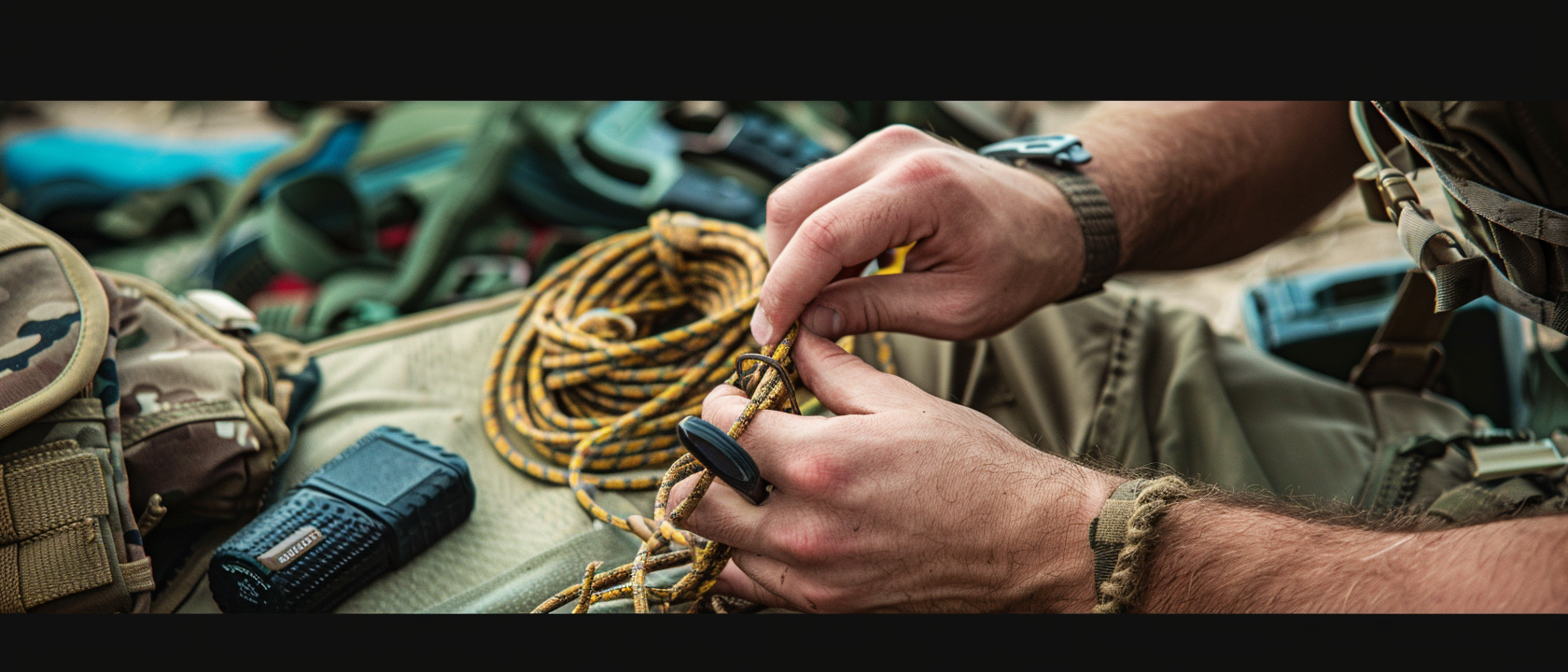
Paracord Survival Uses: 25+ Essential Applications
Learn the many survival uses for paracord. From shelter building to first aid, here's why 550 paracord belongs in every emergency kit.
Affiliate Disclosure: ZT1 Prep is reader-supported. When you buy through links on our site, we may earn an affiliate commission at no additional cost to you. This helps us keep creating practical preparedness content. Full disclosure.
Paracord Survival Uses: 25+ Essential Applications
Paracord—originally designed for parachute suspension lines—has become one of the most versatile survival tools available. A 50-foot hank weighs just ounces and can save your life in dozens of ways.
This guide covers what makes quality paracord, how much to carry, and 25+ practical survival uses.
What Is 550 Paracord?
“550 paracord” refers to Type III parachute cord rated to 550 pounds tensile strength. Genuine 550 paracord contains:
- Outer sheath: 32-strand woven nylon
- Inner core: 7 strands, each with 2-3 twisted fibers
- Total strength: 550 lb minimum breaking strength
Warning
Not all paracord is equal. Cheap imitations may look similar but use fewer core strands, inferior materials, or have much lower strength. For survival, buy genuine mil-spec 550 paracord.
Identifying Quality Paracord
| Feature | Genuine 550 | Cheap Imitation |
|---|---|---|
| Core strands | 7 | 3-5 |
| Strength | 550+ lbs | 100-300 lbs |
| Sheath weave | 32 strands | 16-24 strands |
| Inner strands | 2-3 fibers each | Single fibers |
| Price | $0.10-0.15/ft | $0.03-0.05/ft |
How Much Paracord to Carry
| Kit Type | Minimum | Recommended |
|---|---|---|
| EDC | 10 ft (bracelet) | 20 ft |
| Get Home Bag | 25 ft | 50 ft |
| Bug Out Bag | 50 ft | 100 ft |
| Vehicle Kit | 50 ft | 100 ft |
Storage options:
- Loose coil (most versatile)
- Paracord bracelet (10-20 ft, always with you)
- Wrapped around gear (handle wraps, straps)
- Paracord belt or lanyard
25+ Survival Uses for Paracord
Shelter Building
- Tarp ridgeline — Suspend a tarp between trees
- Tent guy lines — Replace or supplement broken lines
- Lean-to construction — Lash poles together
- Hammock hanging — Emergency hammock suspension
- Ground cloth ties — Secure shelter flooring
Pro Tip
Learn basic lashing techniques (square lash, diagonal lash, shear lash) before you need them. These skills multiply paracord’s usefulness exponentially.
First Aid
- Tourniquet — Last resort for severe bleeding (requires training)
- Splint binding — Secure splints to broken limbs
- Sling — Support injured arm
- Stretcher construction — Lash poles for emergency transport
- Suture — Inner strands can close wounds (emergency only)
Fire Starting
- Bow drill string — Friction fire starting
- Tinder — Inner strands make excellent tinder
- Fire reflector frame — Lash logs for heat reflection
- Drying rack — Hang wet tinder to dry
Food and Water
- Fishing line — Inner strands work for small fish
- Snare — Single strand traps small game
- Bear bag line — Hang food away from animals
- Water filter hanging — Suspend gravity filters
- Cooking tripod — Lash poles for pot suspension
Tools and Equipment
- Knife handle wrap — Improve grip, store cordage
- Bow/drill lashing — Secure primitive tools
- Spear binding — Attach blade to pole
- Repair straps — Replace broken pack straps
- Zipper pull — Replace broken zippers
Rescue and Signaling
- Trail markers — Bright cord marks your path
- Rescue line — Throw line for water rescue
- Climbing aid — NOT for life-supporting climbing, but aids scrambling
- Signal panel — Bright colors attract attention
Additional Uses
- Belt — Emergency pants holder
- Shoelaces — Replace broken laces
- Dental floss — Inner strand for tooth care
- Sewing thread — Inner strand repairs clothing
- Glasses retention — Keep eyewear secure
- Dog leash — Emergency pet control
Using Inner Strands
The outer sheath and inner strands serve different purposes:
Outer sheath: Strong cordage for structural applications (ridgelines, lashing, guy lines)
Inner strands: Fine cordage for detailed work:
- Each of 7 strands: ~35 lb strength
- Individual fibers: 5-10 lb strength
- Great for: fishing, snares, sewing, dental floss
How to access inner strands:
- Cut desired length of paracord
- Pull apart outer sheath at one end
- Extract inner strands
- Separate individual fibers if needed
Paracord Knots to Know
Master these knots before an emergency:
| Knot | Purpose |
|---|---|
| Bowline | Fixed loop, won’t slip |
| Taut-line hitch | Adjustable tension |
| Prusik | Climbing, adjustable grip |
| Clove hitch | Quick attachment to poles |
| Square lashing | Joining poles at 90° |
| Diagonal lashing | Joining poles at angles |
| Trucker’s hitch | Mechanical advantage |
Note
Practice knots until they’re muscle memory. In cold, wet, or dark conditions, you won’t have time to reference instructions.
Paracord Limitations
Know what paracord shouldn’t do:
Never use for:
- Life-supporting climbing (use rated climbing rope)
- Primary rappelling (dynamic rope required)
- Long-term outdoor exposure (UV degrades nylon)
- Heavy load-bearing over time (nylon stretches)
Paracord is survival cordage, not professional climbing/rescue equipment.
How to Carry Paracord
Paracord Bracelet
Paracord Survival Bracelet
Wearable paracord that provides 10-20 feet of emergency cordage always on your wrist.
Pros
- Always with you
- 10-20 feet of paracord
- Many styles available
Cons
- Takes time to unravel
- Limited length
ℹ️ Check unraveled length - varies by size
Check Price on AmazonA paracord bracelet keeps 10-20 feet on your wrist at all times. When unraveled, you have instant cordage.
Pros: Always with you, fashion accessory Cons: Time to unravel, limited length
Hank/Bundle
Traditional loose coil, often secured with rubber band or velcro:
Pros: Instant access, any length, easy to deploy Cons: Can tangle, takes bag space
Handle Wraps
Wrap paracord around knife handles, flashlights, or tools:
Pros: Doesn’t take extra space, improves grip Cons: Takes time to unwrap, may not lay flat after
Belt or Lanyard
Woven paracord belts contain 50-100+ feet:
Pros: Large amount, always worn Cons: Slow to access, fashion commitment
Budget vs. Quality
| Option | Price | Best For |
|---|---|---|
| Cheap paracord | $5/100ft | Practice, non-critical |
| Mil-spec 550 | $10-15/100ft | Survival, serious use |
| Paracord bracelet | $5-15 | EDC carry |
| Titan SurvivorCord | $20+/100ft | Maximum utility (fire/fish/snare) |
Recommendation: Buy genuine mil-spec 550 paracord for your kits. The small price difference could matter when your life depends on it.
Paracord Maintenance
- Dry completely before storage (prevents mold)
- Avoid UV exposure long-term (weakens nylon)
- Inspect before critical use (look for fraying, wear)
- Replace after heavy use (stretching indicates fatigue)
- Store loosely coiled (tight winding stresses fibers)
Paracord Kit Checklist
-
-
- Learn 5 essential knots Essential
- Practice tarp setup with paracord Essential
- Learn to extract inner strands Recommended
- Practice basic lashing techniques Recommended
- Keep small repair kit (lighter for melting ends) Recommended
Frequently Asked Questions
Is paracord strong enough for climbing?
How long does paracord last?
What's the difference between Type III and Type IV paracord?
Can I use the inner strands for fishing?
How do I prevent paracord ends from fraying?
Sources
- ITS Tactical - Paracord Guide
- Sensible Prepper - Cordage Uses
- The Prepared - Paracord Guide
- Animated Knots — Knot tying reference
Related:
ZT1 Prep Team
Practical preparedness for real life
Related Guides
Home Water Storage: Complete Guide for Emergency Preparedness
How to store water at home for emergencies. Containers, treatment, rotation, and how much water you actually need for your family.
guidesHow to Build a Bug Out Bag: Complete Beginner Guide + Checklist
Learn how to build a bug out bag from scratch. Complete checklist, packing priorities, weight guidance, and beginner-friendly gear recommendations.
guidesHow to Build a Get Home Bag: Complete Beginner Guide + Checklist
Build a compact get home bag to help you reach home during emergencies. Lightweight essentials, urban considerations, and a printable checklist.