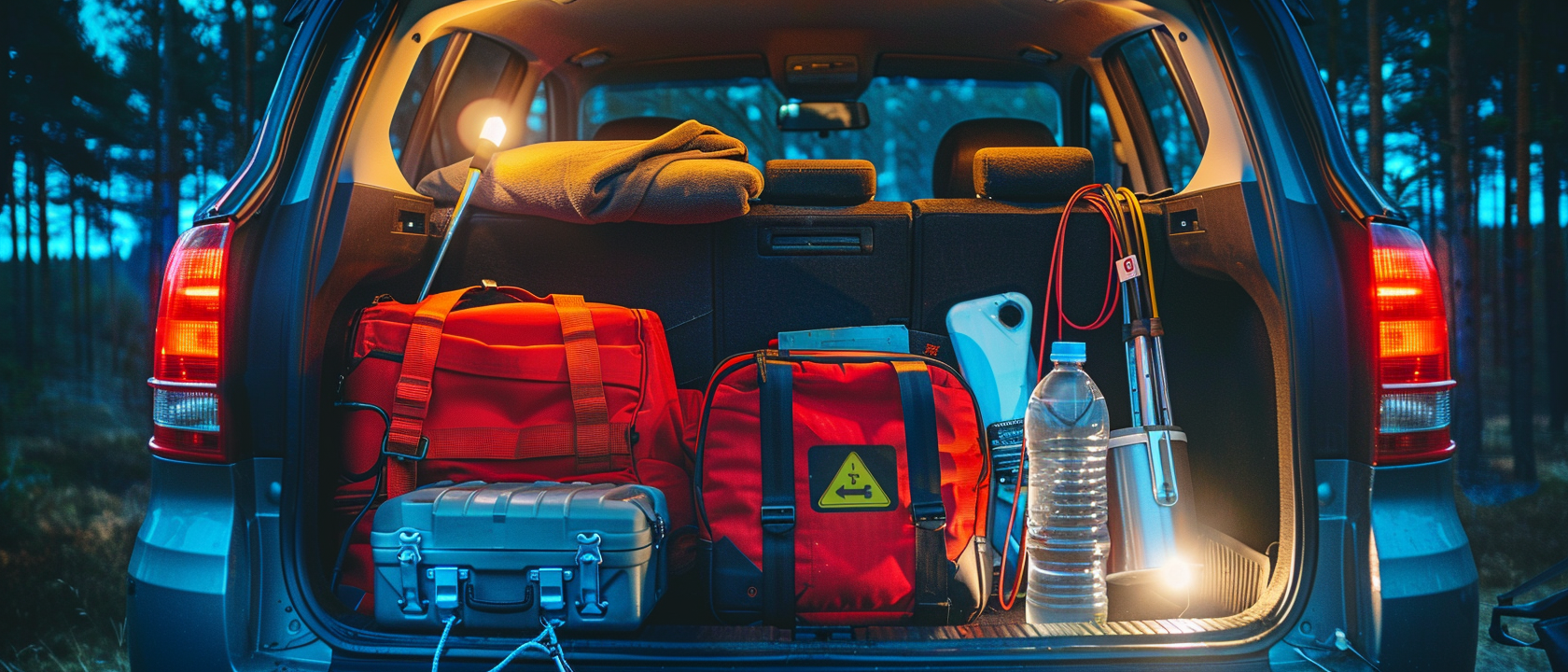
Vehicle Emergency Kit: Complete Car Survival Checklist
Build a comprehensive vehicle emergency kit for breakdowns, accidents, and disasters. Essential gear every driver should keep in their car year-round.
Affiliate Disclosure: ZT1 Prep is reader-supported. When you buy through links on our site, we may earn an affiliate commission at no additional cost to you. This helps us keep creating practical preparedness content. Full disclosure.
Vehicle Emergency Kit: Complete Car Survival Checklist
Your car can become a lifeline or a death trap depending on how prepared you are. Whether you’re stranded on a remote highway, stuck in a winter storm, or evacuating during a disaster, a well-stocked vehicle emergency kit can save your life.
This guide covers everything you need to build a comprehensive car kit that handles breakdowns, accidents, and survival situations.
Why You Need a Vehicle Emergency Kit
The average American spends nearly an hour per day in their car. That’s 365+ hours annually where things can go wrong:
- Mechanical breakdowns — flat tires, dead batteries, overheating
- Weather emergencies — snowstorms, flash floods, extreme heat
- Accidents — crashes requiring first aid and signaling
- Traffic delays — hours stuck without food, water, or medications
- Natural disasters — earthquakes, wildfires requiring evacuation
Warning
Every year, people die from exposure in their vehicles during winter storms. A basic survival kit costing under $100 can prevent this.
Vehicle Emergency Kit Categories
Build your kit in layers based on the scenarios you’re most likely to encounter.
Tier 1: Roadside Breakdown Essentials
These handle the most common vehicle emergencies:
Roadside Breakdown Kit
- Jumper cables (or jump starter) Essential
- Tire pressure gauge Essential
- 12V tire inflator Essential
- Fix-a-Flat or plug kit Recommended
- Basic tool kit (screwdrivers, pliers, adjustable wrench) Essential
- Duct tape Essential
- WD-40 or penetrating oil Recommended
- Spare fuses (vehicle-specific) Essential
- Tow strap (20,000 lb rated) Recommended
- Reflective triangles or road flares Essential
- High-visibility vest Essential
-
-
Jump Starter vs. Jumper Cables: A lithium jump starter is more convenient (no second vehicle needed) but costs more and requires charging. Traditional jumper cables never fail if another car is available.
Tier 2: Survival Essentials
When you’re stranded longer than expected or away from help:
Survival Supplies
- Water (1 gallon minimum, rotate every 6 months) Essential
-
-
-
- Extra clothing layer (jacket, hat, gloves) Essential
- Rain poncho Recommended
- Hand and toe warmers (winter) Essential
Check expiration dates
- Sunscreen and sunglasses (summer) Recommended
- Prescription medications (7-day supply) Essential
- Cash ($50-100 in small bills) Essential
Datrex Emergency Food Bars
Coast Guard approved emergency rations. 5-year shelf life, non-thirst provoking.
Pros
- 5-year shelf life
- Coast Guard approved
- Non-thirst provoking
Cons
- Bland taste
- Not a complete diet
ℹ️ Check manufacture date for freshest stock
Check Price on AmazonDatrex bars last 5 years, won’t melt, and don’t make you thirsty—ideal for vehicle storage.
Tier 3: First Aid and Safety
Handle injuries and get help:
Surviveware Large First Aid Kit
Comprehensive 200-piece kit with MOLLE attachment. Great for families.
Pros
- 200 pieces
- Labeled compartments
- MOLLE compatible
Cons
- Larger/heavier
- Some fillers included
ℹ️ Check current contents - may vary by batch
Check Price on AmazonFirst Aid & Safety
-
- Seat belt cutter / window breaker Essential
Keep within reach of driver
- Fire extinguisher (5-BC rated minimum) Essential
-
- USB car charger Essential
-
- Paper maps of your area Recommended
- Emergency contact card Essential
- Pen and paper Recommended
Pro Tip
Mount the seat belt cutter/window breaker where you can reach it while buckled. In an accident or submersion, seconds matter.
Tier 4: Extended Situations
For serious emergencies or when you’re far from civilization:
Extended Emergency Kit
- Compact shovel Recommended
- Traction mats or cat litter (winter) Recommended
Cat litter provides traction on ice
- Ice scraper and snow brush Essential
Winter climates
- Tarp (8x10 minimum) Recommended
- Paracord (50 ft) Recommended
-
-
- Fire starting kit (lighter, ferro rod, tinder) Recommended
-
- Toilet paper in waterproof bag Recommended
Seasonal Considerations
Winter Kit Additions
Cold weather demands additional preparation:
- Wool blankets — warmer than emergency blankets alone
- Hand/toe warmers — HotHands last 8+ hours
- Ice scraper with brush
- Traction aids — sand, cat litter, or traction mats
- Small shovel — fold-up military style works well
- Extra warm clothes — hat, gloves, socks, jacket
- Candle and metal can — a single candle can warm a car interior
Warning
If stranded in winter: Stay with your vehicle. Run the engine 10 minutes per hour for heat. Clear snow from the exhaust pipe to prevent carbon monoxide poisoning. Crack a window slightly.
Summer Kit Additions
Heat presents different challenges:
- Extra water (2+ gallons recommended)
- Sunshade for windshield
- Coolant/antifreeze (1 gallon)
- Electrolyte packets
- Spray bottle for cooling
- UV-blocking sunglasses
- Wide-brimmed hat
Storage and Organization
Where to Store Your Kit
- Trunk: Main supplies in a duffel bag or plastic tote
- Under seats: Compact emergency items you need fast
- Glove box: Registration, insurance, emergency contacts, flashlight
- Center console: Phone charger, window breaker, basic tools
- Door pocket: Pen, paper, flashlight
Container Recommendations
- Hard-sided tote — Protects contents, stackable
- Duffel bag — Easy to grab if abandoning vehicle
- Backpack — Carry it if you need to walk
Label your container clearly so family members can find it.
Maintenance Schedule
Your kit requires regular attention:
| Task | Frequency |
|---|---|
| Check flashlight batteries | Every 3 months |
| Rotate water | Every 6 months |
| Check food expiration | Annually |
| Test jump starter charge | Monthly |
| Verify medications current | Monthly |
| Inspect first aid supplies | Every 6 months |
| Check tire pressure (spare) | Monthly |
Pro Tip
Set calendar reminders to check your kit. Many people build a great kit, then neglect it until they need it—and find dead batteries or expired supplies.
Budget-Friendly Approach
You don’t need to buy everything at once. Start with the essentials:
Phase 1 (~$50):
- Jumper cables
- Basic first aid kit
- Flashlight
- Emergency blanket
- Bottled water
- Granola bars
Phase 2 (~$75):
- 12V tire inflator
- Fire extinguisher
- Reflective triangles
- Work gloves
- Multi-tool or basic tools
Phase 3 (~$100+):
- Jump starter (replaces cables)
- Quality first aid kit upgrade
- Power bank
- Seasonal additions
Complete Master Checklist
Complete Vehicle Emergency Kit
- Jumper cables or lithium jump starter Essential
- Tire pressure gauge Essential
- 12V tire inflator Essential
- Basic tool kit Essential
- Duct tape Essential
- Spare fuses Essential
- Tow strap (20,000 lb) Recommended
- Reflective triangles (3) Essential
- High-visibility vest Essential
-
- Water (1 gallon minimum) Essential
-
-
- Extra clothing layer Essential
- Rain poncho Recommended
- Prescription medications Essential
- Cash ($50-100) Essential
-
- Seat belt cutter/window breaker Essential
- Fire extinguisher Essential
- Phone charger (USB) Essential
-
-
- Paper maps Recommended
- Pen and paper Recommended
Frequently Asked Questions
How often should I replace water in my car kit?
Should I keep a spare tire or rely on fix-a-flat?
Where should I mount my window breaker?
Do I need a different kit for road trips?
What size fire extinguisher for a car?
Sources
- Sensible Prepper - Vehicle Emergency Kit — Comprehensive vehicle preparedness videos
- AAA Emergency Car Kit Recommendations
- Ready.gov Car Emergency Kit
- FEMA Emergency Supply List
Related:
ZT1 Prep Team
Practical preparedness for real life
Related Guides
Winter Car Preparedness: How to Prepare Your Vehicle for Cold Weather
Get your car ready for winter driving and emergencies. Complete checklist for winterizing your vehicle plus essential gear to keep in your trunk.
guides72-Hour Emergency Kit: Complete Checklist and Guide
Build a 72-hour emergency kit for your family. Complete checklist, recommended products, and how to prepare for any disaster that forces evacuation.
guidesLong-Term Food Storage: Complete Beginner's Guide
How to build a long-term food storage pantry. Shelf life, storage methods, what to buy, and how much food your family needs for emergencies.